Category Archives: Uncategorized

Is This My Future?

I’ve been a huge fan of Paul Theroux’s travel books, “The Great Railroad Bazaar,” “The Old Patagonian Express,“ etc. and have just finished “Deep South: Four Seasons on Back Roads” where he travels through the deep south of the United States. For me it doesn’t measure up to many of his earlier books, but at the end he wrote something I can identify as I approach three score and fourteen:

“Often, talking with someone in the South — a young farmer, a fifteen-year-old mother, a perspiring and potbellied policeman, an indignant gun nut, a toothy preacher, an idle college student, a genteel bank clerk, a harassed community volunteer, or an insulted citizen — I gathered from their response that I was speaking a different language, one that caused them to open their mouths in incomprehension and squint at me. At first I took it to be my Yankee manner, the affronted wanderer, the unlikely stranger with unexpected questions, someone to be appeased or placated.

“No, it was something else. It dawned on me slowly over months that to them I was an old man, who didn’t really count for much but who needed to be humored or grudgingly respected. This response made me mutter and shake my head, because I didn’t feel old. I felt — still feel — I am in the prime of life. But it’s wrong to say that aloud or to object; protestation is a grim old coot’s standard reflex. The hardest thing for anyone healthy to accept is increasing age. Yet why should you feel old if you’re not infirm? I was fit enough to drive all day, hundreds of miles, and to manage this trip; to be lost and to find my bearings; to endure abuse at times, to take the knocks and reverses of the road and a degree of skepticism or hostility from folks en route. Possibly some of them cupped their young hands and whispered behind my back, ‘De old man.’

“A news story I heard on my car radio gave me a clue. The announcer said, ‘An elderly man and a child were struck by a car late yesterday afternoon as they crossed Mabry Road near Highway 49 in Tutwiler,’ the sort of details that resolved themselves into the jerky afterimage of an unlucky man holding a child’s hand at duck, on the road, on foot in the heat — because the man was old and poor. Then more facts: ‘Warren G. Beaver, seventy-two and his granddaughter…’

“I laughed out loud and punched the radio off. Elderly!”

Is this how I can expect to be received if I buy a boat and cruise the Gulf Coast Intracoastal Waterway? Or sailing down the upper Mississippi? An elderly old coot?

3 Comments

Filed under Uncategorized

The Boat I Want and Why

About a year ago when my friend Stephen suggested I move back to the States and that we’d look for a boat for me to buy and live on I wasn’t ready to pick up sticks and leave Panama. But the kernel had been planted and I started mentally masturbating about what kind of boat I’d look for if I did make the move. The exercise begins by figuring out HOW the boat would be used.

If I were to return to the States I wouldn’t want to live on a boat stuck in a marina. Been there, done that. But I had a reason I was living like that…I needed to work to make money and survive. I survived but I didn’t make much money. I always had something going where I paid little to no rent at all for nearly five years. (Then I fell in love, moved ashore, and now both the bitch and the boat are gone…) Now, having retired and getting a Social Security deposit every month I don’t have to worry about survival any more.

So, if I was going to be on the move, where would I be going? Well, it’s something I’ve named The Great U.S. Inland Waterway Challenge. You don’t have to cross oceans to have nautical adventures. In fact, you don’t even have to go very far to have them, either. Unfortunately most people thing that “cruising” means traversing large bodies of water while fighting gale-force winds. Not so! Taking your boat to a lake or estuary and investigating parts of it you’ve never seen before is just as valid a nautical adventure as sailing single-handed around the world in a 10-foot boat.

There’s a ton of water-born adventuring to be done inside the boundaries of the United States. For instance there’s the “Great Loop.” That’s a circumnavigation of the eastern half of the United States by water.

loop

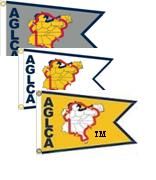
There are clubs, Facebook pages and internet groups devoted to this enterprise. They even have a website and burgee…http://www.greatloop.org

burgee

Well, I’ve got that one under my belt. In ’74, my first captain’s job I took a 43-foot Hatteras tri-cabin from Burnham Park in Chicago, went the lengths of lakes Michigan, Huron and Erie, out the Erie Canal, down the Hudson River and then did the entire 1,100-mile Atlantic Intracoastal Waterway single-handed. (Ive since run the Atlantic ICW four more times. Three times south and once south to north.) In ’75 I left Burnham Harbor with a couple on their 51-foot sailboat and we went down the Illinois and Mississippi rivers to New Orleans and then happened to end up at Bahia Mar marina in Fort Lauderdale, FL where I’d ended the voyage the year before.

What else is left? Lots. There’s the Gulf Intracoastal Waterway for an additional 1,000 miles. I’ve done a couple of little segments from Destin, FL to New Orleans and little parts of it in Louisiana when I was running inland crew boats around Morgan City, New Iberia and a few other sections.

Then, I thought, if I had a small enough boat that was easily trailerable I’d haul it up to Minneapolis and come down the Mississippi all the way to the Tennessee river, veer off there and take the Tennessee-Tombigbee waterway to Mobile. Already done that segment of the Mississippi from the confluence of the Tennessee to New Orleans in ’75. Coming down the river I’d have to stop a couple of days at Lock and Dam #20 in Canton, Missouri. It’s 30 miles or so north of Hannibal and the home of Culver-Stockton College that I attended for three years.

How about pulling the boat up to Pittsburgh, PA and going down the Ohio in the wake of those great shantyboat inspirations Harlan and Anna Hubbard? At least as far as the Mississippi once more. From there I could have it trailered to Sioux City, Iowa and run the 735 miles of the Missouri River.

So, what kind of boat would I need to do that sort of thing? Well, first of all it couldn’t be too big. It would have to be a “Trailer Sailer” with a retractable keel or centerboard so it would be easy to move around the great distances between, say, New Orleans and Minneapolis cause I’m not going to be able to sail against the current all that way, All along the Gulf ICW in Florida and Texas it’s SHALLOW so draft is a big consideration. My beloved Nancy Dawson drew four feet and so needed  five feet or better under her keel to do well. Many trailer-sailer have drafts as little as a foot and some even less than that.

Roaming around on Craigslist and other boat for sale sites I see that there’s a slew of trailer-sailer boats in the 23-foot range that can be picked up for under $2,000. When I brought this up to my friend Stephen he said, “Yeah, but wouldn’t you be more comfortable on something around 30-feet?” Well, probably! I’d also be a lot more comfortable on the 85-foot Jolie Aire that I ran over in France for three years, too. What’s your point?

I’ve mentioned in other posts about building a pilot house onto a small hull to give standing headroom in the cabin. I DO WANT to stand up when I’m cooking, at least, and to put on my pants.

But the best thing about a small boat in the 23-foot range is that it’s a LOT cheaper than a 30-foot boat.

In and around Fort Lauderdale dock rates are $1.50 to $2.00 per foot per day. So, for a 30-foot boat it would cost $60/night @ $2 and $45/night @ $1.50. For a 23-foot boat it would be $46/night @ $2 or $34.50/night. A difference of $15 or $10.50 at the buck and a half rate. Some of the marinas, though, charge on a minimum of a 30-foot boat no matter how much under that it actually is. Others charge at a 25-foot rate. Even that way it’s $50 a night @ $2 or $37.50.

So, let’s take the lower rate and assume, in all these numbers, that I’ll have to spend one week a month at a marina. The 30-footer would cost me $315/month. The 23-footer would be $241.50 a month, a $73.50 a month savings. Even at the 25-foot minimum rate the $262.50 is a $52.50 savings on my $1,100/month SS check and equals 17.5 gallons of gas @ $3.00/gal. Assuming I can get 12/miles per gallon that one month savings at the lowest amount will get me roughly 210 miles further up the river.

Of course I wouldn’t be spending much time at a dock in Fort Lauderdale to begin with. So let’s take a look at an out-of-the-way place like Steinhatchee up in the Big Bend area of Florida…

At Riverhaven marina in Steinhatchee, FL, up in the Big Bend area of the Gulf Coast, the cost for an uncovered slip is 50¢/foot a day. So, easy-peasy, a 30-footer would go for $15/day. The 23-footer would be $11.50/day or $3.50/day savings. No big deal. But the weekly difference would be $24.50 or, over a year that’s $294. That would be 98 gallons of gas @ $3 gal. or 1,176 miles under the crank-up keel.

Let’s say I wanted to spend the winter months up there. The monthly rate is quoted at $149.50 and for a four-month stay it would set me back just under $600. Not bad when you consider that my half of the duplex rent when I lived in Fort Lauderdale six years ago was $600/month.  In fact, the monthly rate at this marina would be just half a buck short of what I’m paying for rent in Boquerón.

So, let’s go over to Texas since I plan on running the ICW all the way to Brownsville…

In Corpus Christi, at the Corpus Christi Marina short term slip rates are $1.50/ft. = $34.50/night for 23-footer and $45 for the 30-footer.

Across the way at Islands Moorings in Port Aransas doesn’t matter if it’s 23-foot or $30 the rate is $35 per night for vessels up to 32 feet and then they’re gonna nick ya $7 to hook up to 30 amp electricity. At the end of the line in Brownsville and South Padre Island there are several marinas but most don’t list their rates. It’s sort of a “Surprise, you can’t afford to be here…” situation. The one place that DID list a rate for transient dockage is the Sea Ranch Marina at South Padre Island and 23’ or 30’ or any feet it’s $65/night though they’re generous and throw in the electricity at that price. And people wonder why I’m so inclined to say TUCK FEXAS!!! But if I want to complete The Great U.S. Inland Waterway Challenge gotta go there.

In 11 days I find out if my new choppers are going to fit. If they do, I’ll give it a month to make sure they don’t need to be adjusted and if all’s good to go then I’ll be having my 74th birthday party in Fort Lauderdale. (July 9th)

Comments Off on The Boat I Want and Why

Filed under Uncategorized

Essential Equipment Omission

One horrible omission I left out of what I consider to be essential equipment on any boat I own would be a depth finder. There are really two kinds. One simply tells you the depth under your keep. It is really the depth under the transducer (the thingy that sends out the sonar signals). You have to add the depth of the keel to that, or subtract, actually. The display unit is something like this…

depth


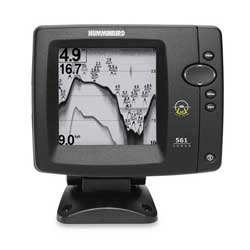
An alternative, and the one I prefer, I called a “Fishfinder.” These instruments display their information in a visual rather than just a simple digital display. While they will spot fish below the boat the reason I like these, and I had one on Nancy Dawson, is that they show you what the bottom looks like. You can see if the bottom is gradually sloping or if it’s a steep drop off, information I think is essential for the safe operation of your boat. Displays look like this…

fish


I don’t care about the fish. I usually drag a lure behind me and have snagged some really nice meals that way, but as far as “finding” fish is concerned I couldn’t care less.

And another important omission was that of a stove. How are you going to cook that damned fish you just caught, anyway?

Many boats that have stoves have alcohol stoves. These are supposed to be the “safest” but if the boat I buy has one it’s going on Craigslist immediately. The damned things have too many downsides to make them worth while. One is that alcohol for cooking is expensive, and it’s not that easily available in out of the way locations. Secondly they don’t cook worth a damn. I was making a delivery one time from New Jersey to Fort Lauderdale on a converted oyster dredger and it had an alcohol stove. It took nearly half an hour to boil a couple of cups of water so we could make coffee in the morning.

Of course electric ranges are out of the question. Propane gets a bad rap. It’s heavier than air and a leak means the gas will drop down into the lowest part of the vessel where it becomes an explosion hazard. Even so, it is probably the most efficient medium for cooking to be found. When I had my Kaiser 26 one of the first buys was a two-burner stove from an RV outlet. It used propane and when I was off on my nine-month cruise I had to 5-lb tanks. In that whole time I only used 15 lbs. When I got back to the States I bought a 20 lb. tank. To be safe, when I was finished cooking I’d turn the gas off at the tank letting what was left in the hose burn off and then I’d detach the hose from the stove. It may sound like a bit of a pain to do that, but all told it was probably less than two minutes out of my day and I can live with that.

There are plenty of camping stoves available at reasonable prices but most of the ones I’ve seen use those stupid little disposable gas canisters and I’m not going to tote a bunch of those around, and trying to locate a place that sells them when you’re running low is a hassle I don’t want to put up with. A 20-lb. tank, on the other hand, is easy to deal with. With so many barbecue unit sitting on decks all around the country that use those tanks you can pick up replacements at many gas stations and convenience stores.

And, of course, extremely important is ELECTRICITY! Sure, I’d love to have big solar panels and for a couple of hundred bucks you can get a fairly decent solid panel that should keep your batteries topped off. You have to figure out how much electricity you’re going to be using, though.

One of the first things to do is to convert your running lights to LEDs. They gobble up just a fraction of the power in your batteries. One of the biggest drains I had on Nancy Dawson were the incandescent running lights. They’d completely drain my batteries when I was sailing at night, and as a consequence I ran illegally dark most of the time, only turning on my lights when another vessel was in view so I could be seen. And an incandescent anchor light is a great power thief. That’s why I’d be using the Suaoki solar powered lights for both an anchor light and for interior lighting after dark.

There are some things that will draw directly from the battery bank…the VHF radio is one. It will be on all the time when underway. The depth finder also runs directly off of the batteries but it doesn’t need to be constantly running if you’re in the channels of the ICW. You just need to turn it on when trying to creep into a shallow anchorage.

What I really need power for is to charge my notebook computer, my tablet computer and my smartphone. The phone is also my entertainment device filled with audible books. All of these can be charged via an inverter, a device that turns the battery’s DC power into a simulation of AC power. A 1,000 watt inverter can also power small hand tools like sanders and saws.

When I was living on my Kaiser 26 I had a 1,000 watt Generac generator. It had a DC outlet to help charge the batteries, but I also had a car battery charger. That damned generator was LOUD! What I’d do when I was anchored somewhere was to fill the tank half way, start it up, hook the car battery charger to it and the bank and then I’d get in the dinghy and go exploring somewhere. By the time I got back the gas had run out, the generator was quiet and the battery bank was charged for the next two or three days. I’m not ruling that out as a possibility.

There’s probably other essentials I’ve forgotten but that’s it for today.

2 Comments

Filed under Uncategorized

Setting Priorities

When I get back to the States sometime around July I want to buy something like this —

catalina

Why? Primarily because they’re cheap to buy. This one has an asking price of $3,500 and if you look on Craigslist you’ll find a lot of these “trailer sailers”some with asking prices of $1,500 or less.

It’s easy to see that a boat like this sure doesn’t have much headroom inside. Many of the builders eased that a bit with the creation of “pop tops.”
Catalina25_poptop2

These give close to 6-foot headroom in much of the cabin. Of course you’ve got all that open air space between the top and the cabin. Not real good when it’s raining or you’re somewhere where it’s buggy. But they do make canvas fixtures that enclose the cabin.

cover


Several downsides to something with this. First, you can’t use it while underway. Second, can you imagine what a pain in the patootie it would be putting this thing on every day if you’re out cruising? And taking it down. And doing it when the wind’s blowing like stink. Or it’s raining. No thanks.

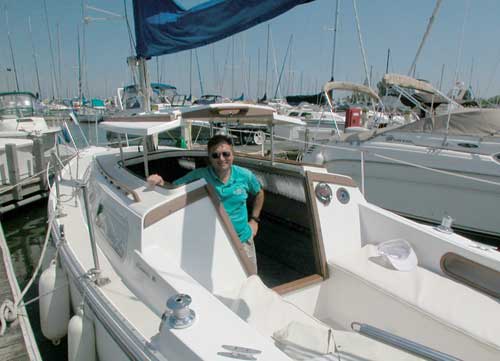
So I’d want to build a pilothouse that would cover where the pop top was in the first place and make it attractive.

20492-5746723

That pic is of a Compac 23, but it wouldn’t be that hard to do with glass over foam. My friend, Stef, and I could do a good job of it.

BUT, one of my goals upon returning to the States and getting a boat is to go “adventuring.” The first thing I want to do is run up the ICW and go explore the St. John’s River and then return to Ft. Lauderdale for the first Thanksgiving dinner in seven years.

That means setting priorities. One thing I learned long ago as a professional yacht captain is that if you wait for everything to be “just right” you will never get off the dock. There are some things on your “to do” list that don’t have to be done before you leave. They can be done along the way. Building the pilothouse isn’t one of them, of course but it can wait since it’s not essential for making the trip, just for making it more comfortable.

Every boat comes with some extras that simply aren’t mentioned in the ads. Things like compasses, fenders (you lubbers call them “bumpers”) docking lines, life jackets, etc. Usually, but not always. I’ve given this a lot of thought about what is essential in order to make my first cruise.

REQUIRED

The Coast Guard mandates that boats carry certain equipment when underway. Some things are required on ALL boats no matter what their size, but mine will be less than 26 feet so I’m just going to list what I’LL need to have…

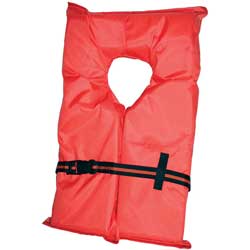
Recreational boats must carry Coast Guard approved Personal Flotation Devices, in good and serviceable condition, and of the appropriate size for the intended user. Wearable PFDs must be readily accessible, not stowed in bags, locked or closed compartments or have other gear stowed on top of them. Throwable devices must be immediately available for use. There must be one Type I, II, III, or V PFD for each person on board or being towed on water skis, etc., PLUS one Type IV throwable device.

This is a Type II life jacket and is for “inshore” use and since I’ll only be cruising the ICW (Intracoastal Waterway) this is all need. I’ll carry three so I’ll have some if I want to take a couple of people along for an afternoon.
Type II

A “throwable” device could be one of these.

throw

vest


Each vessel is required to have a “throwable” floating device: throw

I’ll probably get one of these for myself. It’s a “Coastal Automatic Inflatable Life Vest… cuz with a small boat like the one I’ll be on you never know when you might end up in the drink and this type is light and non-restricting.

vest


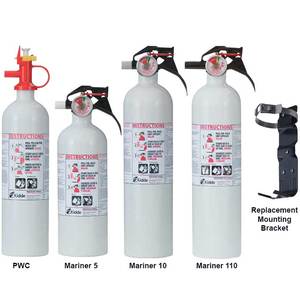
This is kind of “iffy.” You’re supposed to have at least one B-1 type Coast Guard-approved hand portable fire extinguisher.
fire

Where the “iffyness” comes in is that they’re not required on outboard boats less than 26 feet long and not carrying passengers for hire if the construction of such motorboats will not permit the entrapment of explosive or flammable gases or vapors, and if fuel tanks are not permanently installed. I’ll be a “sailboat” not a motorboat. I’ll be under 26 feet long and I won’t be carrying passengers for hire. Also my fuel tanks won’t be permanently installed. I WILL, though, be cooking on board with propane and one would be really stupid not to have a fire extinguisher. In fact, you should probably have one in the kitchen of your HOUSE. Flash fires from cooking oil or bacon fat are not unheard of.

All boats are required to carry visual distress signals approved for daytime and nighttime use. For pyrotechnic devices (hand-held or aerial red flares, floating or hand-held orange smoke, and launches for aerial red meteors or parachute flares) a minimum of three required, in any combination that totals 3 for daytime and 3 for night use. Three day/night devices will suffice. Devices must be in serviceable condition, dates not expired and stowed accessibly. Again, running in the ICW makes having these kind of a waste of money, but you HAVE TO HAVE them, soooo.

Every vessel less that 39.4 feet (12 meters) long must carry an efficient sound-producing device: a bell or a whistle. COLREGS (The International Regulations for Preventing Collisions at Sea) have specific rules about sound signals that vessels are required make in foggy conditions. Horn signals if the boat is underway, and bells if anchored. A horn isn’t strictly required but is a “must have,” in my opinion, in order to signal bridges that need to be opened and to  signal other boat of your intentions when underway in passing situations.

Now, just because you have all that on board doesn’t mean you’re ready to leave the dock and go cruising…In addition to the stuff that’s required there are still the…

ESSENTIALS 

In no particular order of importance, you’ll need to have:

At least four lines to secure the boat to a dock. It’s also a good idea to have a couple of others in reserve since it’s not unknown to leave on on the dock from time to time. One should also carry about 100 feet of extra line, just in case.

Your boat also needs to have running lights to comply with COLREGS if you get caught out after dark. You also need to have an all-around white light to show if you’re anchored. As far as the anchor light is concerned I’m really thinking of getting two or three of these…

lights

http://www.amazon.com/Backpacking-Rechargeable-Collapsible-Waterproof-Lightweight/dp/B00Y82IHWE/ref=sr_1_2?ie=UTF8&qid=1461089445&sr=8-2&keywords=suaoki

When I first ran across them somewhere in my net surfing I thought they’d be great as anchor lights and for interior lights as well. A couple I know who recently settled in nearby Boquete did some extensive cruising that encompassed the Pacific coast, a passage through the Panama Canal and Caribbean cruising said they has some of these and they loved them.

A VHF radio, either a base station or a hand held is essential. You need them to contact bridges you need to have opened. You need them to contact the Coast Guard in case of an emergency. You need them to hear local marine weather notices. You need them to talk to other boats.

An anchor. TWO actually. One as the principle anchor and a smaller, lighter one as a “lunch hook” for temporary anchoring or in cases where currents turn with the tide. What you do in that case is to drop and set your main anchor, let out double the scope you need at that spot and then drop and set the second anchor. When you’ve done that you pull yourself back to where you’d have been after dropping off the first anchor and secure both. Now, as the current changes direction you’ll ride to the second anchor rather than swinging in a big circle possibly dislodging the single answer and be dragged to some place you don’t want to be.

You’d also use two anchors close in to shore. As you approach the shore you drop one of the anchors and let out rode until your bow touches the beach. Step off into the shallow water, take your bow anchor and embed it deeply some distance up from the high water mark. Now, pull back on the stern anchor line until your sitting comfortably and secure both anchors.

Use PLENTY of chain between your anchor and rope rode. ALL CHAIN rode is best, but you’re not going to be able to carry enough of it around on a 23 foot boat! Curiously my Kaiser 26 had 200 feet of chain rode. The simple weight of it was often enough to keep the boat in position. I vividly remember anchoring off of Ranguana Caye on the outer reef in Belize. I was in six feet of water and let out 60 feet of chain. Whenever possible I dove down to make sure the anchor was well dug in to the bottom. As I swam along in the crystal-clear water I noticed that the chain was lying in an “S” shape about 2/3rds of the way to the anchor. The anchor wasn’t well dug in. It was a rather large Danforth and the flukes were only half way dug into the sand. Problem was they wouldn’t go in any further since it was simply a thin layer of sand over coral.

In the middle of the night a strong squall ripped through the area. There was lightning and heavy rain. The wind was piping at who knows how fast, but the rigging was moaning a low tune. I got up, went on deck towards the bow trying to ignore the rain pelting my skin like evil little imps taking chunks in nasty bites. I let out probably another 50 feet or so, secured it and went back below to my bunk. In the morning I went over the side and swam along the length of the chain. As strong as the wind had been it hadn’t moved the boat enough to straighten out the chain and the “S” was still there, so the strain never reached the anchor itself.

For me, I’ll probably limit the amount of chain I use to no more than 15 feet before connecting it to rope rode. Chain’s heavy, and it’s really going to be rough for me with my COPD to haul that chain and a 25 pound anchor off the bottom and onto the boat. It has to be done FAST because I’ll be by myself almost all the time and once the anchor breaks free from the bottom I’ll be adrift and need to get to the engine and tiller ASAP!

I was lucky on Nancy Dawson since the boat was equipped with a windlass to haul the anchor.Mine was a Simpson-Lawrence but looked a lot like this.

winch

It was mounted on the bow just aft of the bowsprit. You put a winch handle in the hole on the top and cranked away. It was fairly easy though there were a few times when the wind was blowing and I had to haul the weight of the boat against the force of the wind. (A little aside: I see many sailboat boat ads that say the boat is equipped with “wenches.” not “winches.” If they really WERE equipped with wenches I bet they’d sell in no time.)

A motor. On boats like this it’s generally an outboard. A 9.9 hp is generally the maximum and I’ve seen a lot of ads for these trailer sailers that have a 5 hp outboard with them. I’m sure that would push the boat along quite well since they’re rather light not lugging around a huge heavy lead-filled keel.  My Nancy Dawson had one of those keels and she was also built like a tank. She had an 8 hp Suzuki outboard that did double duty as power for the mother ship and for the Avon dinghy, and it did quite well. I’d hope for a 9.9 simply because I believe I’d get better mileage since the engine wouldn’t be pushing so much weight you could run it at a lower throttle setting and save gas.

Almost every one of the boats advertised has sailing gear. Mast, sails, rigging, etc. That’s nice, but I don’t intend on using it. What I’d want to do is scrap the tall mast and rigging and replace it with a free-standing mast that would carry a lug sail like this…

lugsailcruiser

I’d go for something even smaller than that rig. Ninety nine point nine percent of my cruising is going to be in very constricted waters like the ICW and a sail would only be used with the wind abeam, from astern, or on the quarter, and then just to be able to ease up on the outboard’s throttle. I’m done beating into the wind. If I have to go to windward ever again it will be under dead dinosaur power only. AND what I would do for a sail, at least initially, would be a polytarp contraption like this…
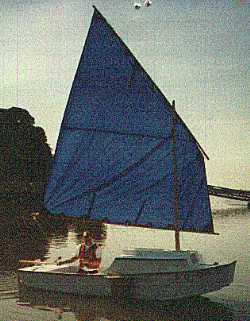
sail

Hey, don’t laugh and don’t forget, I’m doing this on the cheap!

So why scrap the original mast? First, because most of my future cruising is going to be on the ICW I want to open as few bridges as possible, and there are a TON of bridges you have to have open for you when your air draft is 30 feet or higher. I’m thinking of a mast around 20 to 25 feet high in a tabernacle that I can raise and lower in a couple of minutes by myself. Also, being in a tabernacle I could lower it and support on a boom gallows so I could cover it with a boom tent to enlarge my sheltered living space while at anchor or docked.

A nice to have feature, but not an “essential” would be a Bimini cover in the cockpit.

I’m kind of on the fence as to whether a dinghy is an essential or a nice to have. Dinghies are the pickup trucks of cruising boats. They ferry people to shore when the boat is anchored and haul supplies to the anchored boat from shore. They’re also good for visiting other boats in the anchorage and for exploring little creeks where the big boat can’t go. But since I’m going to have a boat that has such shallow draft that I can simply step ashore in ankle deep water, and if I DO have to anchor out it will only be for a night or two at best so why would I need a dinghy.

But if I have a dinghy it WON’T be an inflatable, unless it’s part of the package when I buy the main boat. Inflatables have several bad features. For one, they’re targets for thieves. The damned things are prone to leak air and deflate, and there are a lot of little vandals who like to stick the tubes with something sharp just for fun. Because the primary boat is going to be so small my ideal dinghy would be something like this…

dinghydinghy2

I’d also consider making a Puddle Duck Racer that could be “nested” like the dinghy above. The PDR can be rowed, handle a small outboard or sailed. There are even plans for a modular PDR…I’ve loved the concept of this boat from the first moment I laid eyes on it.

Click to access ModularPDR.pdf

I like the idea of building it with foam and glassing it over. Lightweight, and if made modular it would fit neatly on the foredeck without disrupting the trim too much.

One thing to consider about a dinghy is to make it unique. Make it stand out from the crowd either by design or by painting it some atrocious color so that only an idiot would steal it because it would instantly be recognized as being stolen.

A rain water collection system I would consider an essential so you wouldn’t have to depend on going ashore to a marina to fill water jugs. There are umpteen million ways this could be done, of course so I won’t get into trying to list them, but this is how I did it on Nancy Dawson when I was on my nine-month cruise.

I used some of that epoxy stick I mentioned earlier and built about a two-inch high dam between the cabin and the toe rail astern of the water tank fill, leaving about a four-inch gap so water could flow through unhindered to the scuppers. When it would start to rain I’d let it go for five minutes or so to rinse off the cabin top and the decks. Then I’d plug the gap with a dish towel and open the water tank fill. In a good hard downpour I could fill that 35-gallon tank in about five minutes. During the whole cruise I probably didn’t go ashore for water more than three or four times.

Compass? Most boats will come with one screwed into a bulkhead, but even if there isn’t one on the boat do you think it’s vital when you’re cruising in waters like this…

chart

 If you can’t figure out which way north and south are, here, you shouldn’t be out in a boat in the first place. Which reminds me of a story. (LOTS of things remind me of a story.) Back in ’68, shortly after my ex wife an I moved to Fort Lauderdale I was driving a cab while looking for another job. One afternoon I was sitting outside one of the hotels on the beach waiting for a fare when a car pulled up beside me and asked how to get to such and such a place. I said, “Go north for about…”

“Which way is north?” the tourist interrupted.

Jesus fucking Christ nailed to a stick. Have you ever seen a fucking map of the United States in your entire life? We’re sitting right on the edge of the whole damned continent. Another hundred feet or so and we’d be in the damned Atlantic Ocean and you have to ask which way north is?

Anyway, I consider a pair of binoculars to be an essential item. You need it to pick out crucial buoys and day markers when you approach inlets with a profusion of markers.

That’s about all I can think of off the top of my head right now so I’ll stop. Things that I think are nice to have but non-essential gear will be dealt with later.

1 Comment

Filed under Uncategorized

$3 Three-Hour Diversion

Since deciding that I need to leave Panama and return to the U.S. I’ve also decided that I need to play more “Bus Roulette.” That’s where I simply get on a bus and see where it ends up.

When I go to Bugaba, the nearest town to Boquerón to do a little bit of shopping I have to go down to El Cruce where the Boquerón road intersects with the Interamericana, I usually get on the Divala bus since, for some reason, there always seems to be an empty seat. But until this morning I’ve never been there. So I went down and hopped on. Didn’t get any pictures, but here’s what I saw…

It’s flat down there on the other side of the Interamericana.

Divala is a LOT bigger than Boquerón. Probably 3 times the size, at least.

Lots and LOTS of indigenous people live there. It seemed that nearly all the school kids, and they were EVERYWHERE in their white shirts and blue pants and skirts as there were four schools that I saw in the area, were Indians.

People were WALKING all over the place. Only saw ONE taxi where there’s probably close to a dozen serving the Boquerón, Macano and Bocalatun area. And BIKES! Seems that half the population of Divala rides bicycles.

The houses aren’t nearly as prosperous as here in Boquerón, though here and there were nice houses surrounded by hovels, at least 25% if which had outhouses off to the side. Bamboo grows all over the place and I saw close to a dozen houses that were made out of the stuff.

I was gone for 3 hours and the bus fare was $1.50 each way.

Divala

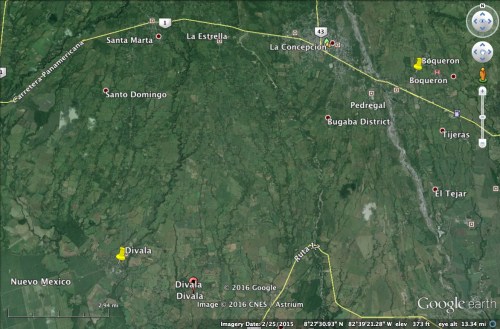
The pic below shows where Divala is in relation to Boquerón…the yellow pin upper right.

Divala big pic

Comments Off on $3 Three-Hour Diversion

Filed under Uncategorized

The Next “Good Adventure”

So, as you know, I’m leaving Panama. It was a “Good Adventure” six years ago, but it isn’t anymore, alas, alack. I’m waiting to have some serious dental work done before I leave, so it’s probably not going to be before early summer at the soonest, but it’s not too soon to be thinking about where this next “Good Adventure” is going to take place.

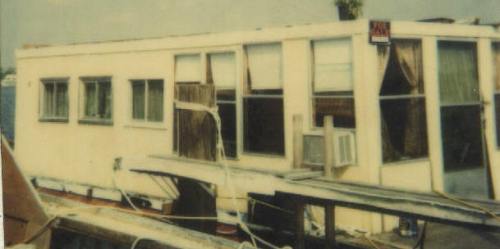
Initially I’ll be returning to Fort Lauderdale. It was home for some 35 years off and on. There were diversions, of course. A nearly 10-year stay in New Orleans that included close to three years on a shantyboat I found tied up to a tree in the Tchefunctae River on the north shore of Lake Pontchartrain and bought for $1,500. The boat, not the tree, the lake or the river, just to be clear.

Houseboat trimmed

Then there was nearly a four-year sojourn that included running this boat out of Antibes on the French Riviera and Marbella, Spain for almost three years,

Jolie Aire-Golfe Juan

and then buying my beloved Nancy Dawson, a Kaiser 26, and taking off for nine months and traveling alone on her to Mexico, Belize and the Rio Dulce in Guatemala.

Nancy Dawson

In Lauderdale I’ll be looking to buy a small sailboat and leave as soon as possible. The question, of course is, “and go where?”

Several places easily come to mind. They are, in no particular order, especially since the seeds are simply germinating now:

The Saint John’s River in northern Florida. When my mom died in 1976 my dad took his two toy poodles, boarded his 26-foot Stamas in Venice, FL and disappeared for six months. No one had any idea where he’d gone. Turns out he’d taken the Okeechobee Waterway across the state, hung a left and went up to the St. John’s where he did his mourning. I have an email friend who built a shantyboat that he charters out up there on the river…http://www.shantycraft.com

shantycraft


I have done what they call “The Great Loop” in ’74-’75. It’s a circumnavigation of the eastern half of the United States. A great adventure but I don’t need to do it a second time.

Great Loop

Both times I left Burnham Harbor in Chicago and ended up at Bahia Mar Marina in Fort Lauderdale. (The end spot was just coincidental but cool since it definitely closed the circle.) Looking at this map you see that the river route splits at the Illinois/Kentucky border. The yellow line is the Tennessee-Tombigbee Waterway route. It was just a pipe dream in ’75 so we went all the way to New Orleans on the Mississippi. I went UNDER every bridge in the New Orleans a year before I went over any of them!

Looking at the map above just gave me another idea…why not do a “Small Loop” and travel UP the Tenn-Tom, as it’s called, and return DOWN the Mississippi?

Then there’s the Intracoastal Waterway. There’s over 3,000 miles of it starting at Mile 0 in Norfolk, VA and then all the way down the Atlantic seaboard to Miami and then the Gulf Coast from Fort Myers to Brownsville, TX.

ICW-Atlantic Map ICW-Gulf Map

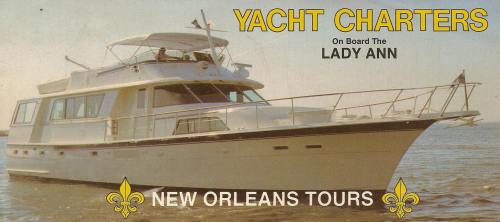
I’ve done the Atlantic Coast portion a half dozen times. The very first time I did it solo on a 43-foot Hatteras tri-cabin in ’74 that I delivered from Chicago to Fort Lauderdale. On the Gulf Coast ICW I’ve only done portions. I ran a Hatteras motor yacht in New Orleans for several years. The owners had condos over in Destin, FL and when they went there they liked to have the boat sitting at their dock sort of as bragging point to how wealthy they were.

Lady Ann-Hatteras 58

So I’ve done the portion from NOLA to Destin a half-dozen times, too. Then, when I was running inland crew boats for a few years I did portions of the Gulf ICW from Houma, LA and as far west as Grand Lake, LA. Perhaps I should take my new boat over to Ft. Myers and do the whole Gulf ICW to Brownsville. That would be a clean sweep of the waterway.

As you look at that map of the Gulf Coast ICW you see a break in the yellow line. That’s called “The Big Bend” and it’s an offshore jump of about 140 miles. In between is called Florida’s “Hidden Coast.” It’s very shallow all through there but there are a lot of places that would be worth poking into, like the Steinhatchee River and the Suwannee River. That’s right, the one Steven Foster wrote about!

Finally, and this would entail some real expense, it would be kind of neat to truck the boat up to Minneapolis  and come down the Mississippi. It would be a kick stopping for a couple of days at Lock and Dam #20 which is in Canton, MO where I went to college for three years. As I got close I’d send press releases saying that a former alum was coming down the river on a boat. I wouldn’t have to go all the way down to New Orleans, though. I could hop on over to the Tenn-Tom and go down to Mobile on it.

There are a ton of possibilities. Which of these do you like best?

1 Comment

Filed under Uncategorized

Packing It In – – Leaving Panama

I never thought I’d say this, and it pains me deeply, but I’m leaving Panama. Calling it quits. Packing it in. Returning to the States.

It won’t be for a couple of months but I’ll most likely be celebrating my 74th birthday in Florida.

Why am I doing this? It’s difficult to put things in any kind of orderly, coherent fashion, so this post is going to roam all over the place, but it’s primarily health concerns that are the reason. I have a serious case of COPD and though I take meds for it breathing is sometimes a real issue. Recently I had an incident that made me decide to take my old and best friend, Stefan, up on his mantra of the last couple of years, “Come back here. We’ll find you a boat you can live on and you can enjoy life again.”

It’s not that I haven’t been enjoying my life here in Panama. I DO. I love this place, but really, when I think about it, I’ve pretty much just been sitting around here waiting to die. So what finally made me decide to act on Stef’s offer? Well, the other day I headed out to the nearby tienda to get something cold to drink. It’s about 50 yards away from my front door, but when I got there the place was closed. So I decided I’d head to the Chino, Panama’s answer to the 7-11, which is about a hundred yards up the small hill past my house. When I got back to my house from the tienda I had to stop and rest for about five minutes to catch my breath. (I didn’t have my Ventolin inhaler with me.) When I got up to the Chino I was panting so hard that I had to sit down on a bench at the park across the street until my breathing returned to normal, and I sat down and rested after buying a couple of quarts of orange juice before walking back to the house. That did it. The decision was made. (More about health in a moment.)

Another issue is “What am I doing here?” The name of this blog is “One More Good Adventure.” Well, I haven’t been doing any adventuring for the last several years. The initial move down here was certainly an adventure. My original idea was to come down and build a shantyboat over in Bocas del Toro and then spend the rest of my life poking around that beautiful archipelago. Obviously that didn’t happen for many reasons that I’ve listed in previous posts and the fact that inertia is hard to overcome.

Another expat who moved down here from Sarasota with her husband, Kris Cunningham, is another inspiration for my decision to leave. She’s a 63-year old woman off on a real adventure. Recently she got on a plane and flew to Seattle, Washington, to visit her daughter and grand daughter. No big deal, right? Well, the thing is, she took her bicycle up there with her and plans on riding it back to Panama! And what am I doing with my adventure???

So, back to health. One thing all of us aging expats need to remember is that Medicare doesn’t pay a penny once you step outside the U.S. Health insurance for anyone in their 70s with three stents in their arteries and COPD is basically unobtainable, and if you CAN get it the premiums are so outrageous that it would take every cent I get from SS each month AND a loan to make the monthly note. I have been signed up on Hospital Chiriquí’s program but it isn’t really insurance. It’s more like a discount program. As at all the hospitals if you’re unfortunate enough to need one, you have to PAY UPFRONT before they’ll do anything for you. And with the program I have they will later reimburse you up to 70% of what you shelled out. It’s not great, but it’s better than nothing. And there are many horror stories about people having to use the public hospital here which is definitely something you don’t want to do.

Why haven’t I left yet? It’s because I’ve been putting off having some extensive dental work done. I don’t want to get into details now, but the fact is that even though it won’t be dirt cheap it will be just a fraction of the cost of what it would be in the States.

What would my new adventure consist of? I want to buy a small sailboat commonly referred to as a “trailer sailer.” Somewhere between 20-25 feet long with a retractable keel so I can creep into places I could never have gone with my beloved Kaiser 26, Nancy Dawson,  with her 4-foot keel. With a retractable keel drawing a foot or so I’d be able to put the boat right up on the beach and step off onto dry sand or just ankle-deep water. I don’t intend on staying stationary in a marina somewhere. After my 9-month sojourn to Mexico, Belize and the Rio Dulce in Guatemala I never went sailing with my boat again. I lived on it at a boat yard for nearly two years and then at Marina Bay. The reason was I was trying to work and save enough money so I could go cruising again, but it never happened.

When I was on the Rio Dulce back in ’92 if I’d have been able to get my hands on just $4,500 a year I could have had a nice life living there on the hook (at anchor). But I couldn’t get that much money so another dream shattered. Now, though, I have a small but steady income from Social Security, and living on a paid-for boat and anchoring out as much as possible, I can still have a nice life.

And what would this “adventuring” consist of? Taking the boat as far north on the Intracoastal Waterway as the Chesapeake and revisiting old places I’d stopped along the way on the half-dozen times I’d traveled that route: Charleston, SC; Belhaven, NC; Wrightsville Beach, NC; St. Augustine, FL among others. Checking out some of the intriguing places I never got to see along the way because I was working delivering the boat I was on. I’d also like to go explore the St. John’s River in north Florida. When my mom died my dad took his two toy poodles, got on his Stamas 26 over in Venice, FL, and disappeared for six months. No one knew where he’d gone. Turns out that he’d taken the cross-Florida route through Lake Okeechobee and vanished into the St. John’s to do his mourning.

I’ve never done the Florida Gulf Coast ICW and I’d like to see what that’s about. I’d like to poke around the waters of the Florida panhandle, Appalachicola, Pensacola, and on over into Alabama and Mississippi. Perhaps go up Mobile Bay and into the Tenn-Thom Bigbee waterway. Go into Louisiana and revisit all the places I know from my crew boat days: the bayous of Cajun country and up into the Atchafalaya. Check out places I’d lived at in New Orleans and St. Bernard Parish. Go on into Texas all the way to Brownsville, perhaps. The entire Intracoastal Waterway system from Norfolk, VA to Brownsville, TX is 3,000 miles. That’s a lot of area to explore. Who knows?

“So,” sez you, ” if you can’t walk 100 yards without getting knackred, how are you going to do all that stuff?”

Beats the hell out of me! There’s a good chance I can’t. ¿Quien sabe? as they say here in Boquerón, but you never know what you can do if you don’t try. But I wouldn’t be doing any long, open-water sailing. Most of what I’d be doing would be motoring or motor-sailing…using the sails when the wind was on the beam or off the quarter. No beating into the wind.

We’ll see.


9 Comments

Filed under Uncategorized

The Little Things

Here’s another one of those events that make me love living here in small-town Panama.

My new digs are right on the main road in Boquerón, and the buses pass by no more than 25 feet from my front door. I enjoy sitting out on the porch with my computer and watch the passing parade. Often the bus drivers will honk as they pass by or wave at me. Buses will pick you up anywhere along their route. You don’t have to go to a designated “Bus Stop.” They’ll stop for me right outside me door and then go forty or fifty feet and pick someone else up. And this service is just for a 60¢ fare!

Getting off, though, has been a bit different. So far no matter what I’ve said I’ve been dropped off at “el parque” (the park) which is sort of a designated stopping point as is “el chino,” the Chinese-run equivalent of a 7/11 here. It’s okay since it’s only a half a block from my house. Today was a bit different. I’d gone into David to try and see a doctor about a dermitalogical problem I’m having with my left foot and ankle – think Elephant Man. The doctor wasn’t in. He comes out from Panamá and is usually here on Saturday, but not today.

But that’s not what I want to talk about. I waited for a while to catch the bus back home and as we were getting close I told the “Pavo” (literally “turkey” but that’s what they call the kid who handles the fare at the door) “el parque” but without saying anything the bus stopped across from my front door. The driver looked up at me in his rear-view mirror and raised his eyebrows questioningly as if to say, “it’s your house, right?”

I told him “muchas gracias, señor,” of course, twice, and again marveled at the wonderful service they give me for a 60¢ fare!


2 Comments

Filed under Uncategorized

Getting Around In Panama

The United States is an automobile-obsessed country. The main reasons for that are the place is HUGE and public transportation outside of major metropolitan areas is practically non-existent. You NEED to have a car or a truck in the U.S. or you’d be house-bound.

It’s a bit different here in Panama. Sure there are cars and trucks. In Panamá (they don’t use the word “City” when referring to the capitol and largest city in the country) it’s nearly non-stop grid lock 31. (That’s 24/7 combined). It’s nearly that bad here in David (dah VEED), too. But cars are expensive here, especially compared to the States and the prices for used cars are shocking. Gasoline and diesel fuel are expensive here, but automobile insurance is ridiculously cheap.

While the number of cars in the cities is staggering, not everyone owns a car. In my old neighborhood there are two dozen homes. Of those, only six have cars! And I believe that’s typical of most of Panama outside of the gringo havens of Boquete and Volcan here in Chiriquí.

So, how do people get around here? Lots of ways…

First of all, they WALK! And I mean everywhere! They don’t just walk around in town, they walk around in the countryside. The main road through the country is the Interamericana and as you drive or ride through it on one of the huge, air-conditioned buses you’ll see people walking along in the middle of nowhere. I mean there isn’t a house in sight for miles and no little roads branching off of the main road, either, yet you’ll see people walking along determined to get who knows where? The indigenousNgäbe-Buglé who live way up in the mountainous comarca often have to walk miles before they can get to a road where they can board a bus to get into David for supplies.

There are a lot of motorcycles and motors scooters around, but they don’t come close to how many people use bicycles as their main form of transportation. Over on Isla Colón, Bocas del Toro, there are probably more bicycles than cars, and in my old neighborhood nearly half of the homes that don’t have an automobile have at least one bike. The guy who mowed my lawn in La Barriada strapped his weed-whacker to his bicycle and rode over from Bugaba, about six miles away, to find work.

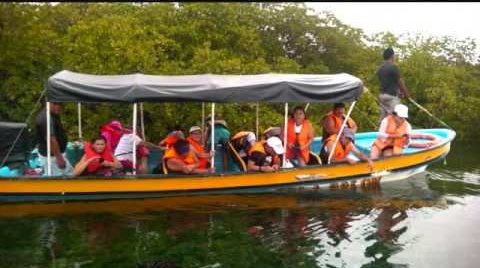
Boats are another form of transportation here. Over in the Bocas del Toro archipelago the only way you can get to Isla Colón is to take a water taxi…

water taxi_Fotor

They will not only take you from the mainland to the island, but they’ll whisk you around to the various islands in the archipelago or just from one place to another as you’d use a regular taxi.

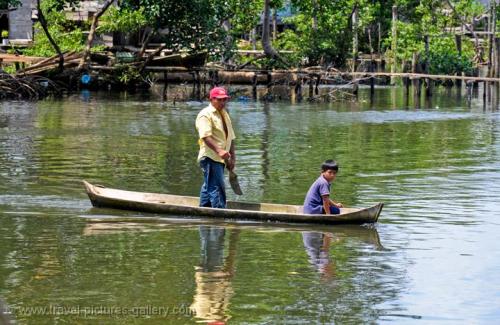
There are also dugout canoes used over in Bocas…

bocas-del-toro-0008

Boats are a much-used method of transportation in Guna-Yala, the San Blas archipelago…

canoe_dudes

And deep into the rain-forest of the Darien the Emberá depend on dugouts and the rivers to get to their isolated villages and bring in tourist dollars. Some of these canoes are quite large…

embera

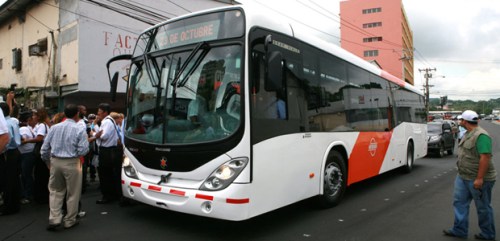
The public transportation system in Panama is remarkable. Buses and taxis will take you pretty much anywhere you want or need to go. There are very few “chicken buses” here…old converted U.S. school buses. When I first moved to Panama they were phasing out the ubiquitous “Diablos Rojos” in Panamá for new, modern,  and totally unremarkable buses like you’d find in the States.

metro-bus-panama

The “Diablos” had character, though, and I think much of the vibrancy of the city was lost when these were consigned to the dustbin of history…

diablo

There are still a few of these around, though not colorful like these. The buses running up to Gringolandia (Boquete) are still yellow and say “School Bus” on the front over the windshield, and the bus from David to Soloy in the Comarca are the same. The reason for the Boquete buses are that there are so many people up there they need the school buses for the capacity. The most common buses here, and are on most of the routes in the country are the air-conditioned, 30-seat Toyota Coasters

30-seat-toyota-coaster-dubai


The school buses for the Comarca, though they might not have the volume of passengers to fill all the seats they sure need the room for when the indigenous come into David to do their shopping…

shopping

The buses that travel from David to Panamá are generally these…

bus

Huge, air-conditioning so cold you could store meat, which may be how the company views its passengers, playing movies along the 7 hour trip (knock off an hour for the late night express bus). When I went to Panamá recently the fare, each way, with the Jubilado (old fart) discount was $12.65. The bus from my front door (literally my front door) into the terminal in David is a 60¢ fare. In town there’s no discount but it’s not a big deal since the fare is just 35¢.

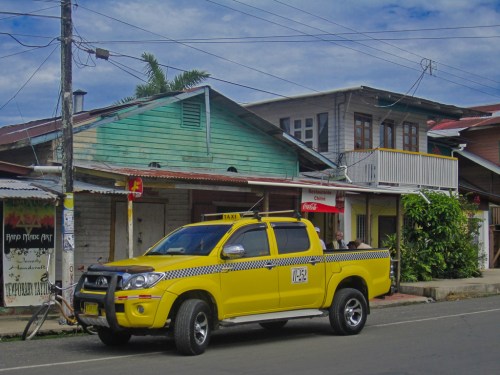
Did you know it’s against the law to own a yellow car in Panama? The color yellow is reserved solely for taxis and they’re EVERYWHERE!

taxiMany of the taxis are pickup trucks like this one over in Bocas del Toro…I used the local ones here when I made my moves…

Follow my travels online at http://travel.beiske.com

Of course you can FLY from David to Panamá for about $100 each way and it only takes a bit more than an hour, but you don’t get to see a damned thing on the way.

So, that leaves one last way people get around in Panama…the horse. It’s STILL a mode of transportation in this country. When I lived in Potrerillos Arriba there was a guy a couple of houses down the dirt road who was a carpenter. In the morning he’d load his tool bags onto his horse and off he’d go to work. And just the other day this guy rode in to town to use the ATM at the Banco Nacional!

horse


1 Comment

Filed under Uncategorized

Move Completed

I’m not going to try and edit this post. It’s a collection of things I’d written down when I was without an internet connection as a result of my recent move.

Well, the move is finished. Done. Complete. And let me tell you, so am I. I’m beat. Whipped. Done in. The last three days (Sat. Sun. Mon.) beat me up bad, and I had help with the heavy lifting every day. Today when I was at the old house wrapping things up I could only work for a few minutes at a time and then I had to rest before I could continue.

That was written Monday evening. A pickup taxi driver, Remiro, I’ve used several times before did all the heavy lifting for me for which I was very grateful, but everything is out of the old house and into the new.  Well, it’s not a house, really, but on of two apartments in a building that was once a set of offices for the Tribunal Electoral which has ceased to be here in Boquerón and moved all its functions over to Bugaba. But the place is half again as big as the house in La Barriada, and easily twice as big as the first house I was living in, here, since I basically lived on the first floor and almost never went upstairs.

Yesterday, Tuesday, I went into David to the Cable Onda office to switch my service to the new place. Piece of cake, and they’re supposed to come do it today, Wednesday. I don’t doubt that they will because this is the FOURTH time I’ve had to have installers come to the houses I’ve been living in and they’ve ALWAYS come.  When I have internet access I’ll feel like I’m truly moved in.

The cable office move went smoothly, and sure enough, the techs were at my house a little before noon and I was back on line in an hour.

Some big goings on over by the bank and the people must have started gather in around six. Right now there’s easily more than 100 people gathered under and around a large, I guess the only way to describe it would be the roof of a tent. I just asked an old guy walking by what was going on and all I could get out of him was that they were waiting for the bank to open. That’s part of the mystery. Yesterday a guy stopped and started talking to me about coming to the bank today and something about paying rent. Had no idea what it was all about. Still don’t.

People continue to arrive, on foot, by bus and in taxis. They’ve just started letting a few people in. There are Europeans and indigenous all together.

Okay, finally two passersby explained what’s going on at the bank. There is a program in Panama that I’ll look up later called ciento para septenta. 100 for over 70. A supplemental give away of $100 to people over 70. That explains all the canes and walkers. We chatted for a couple of minutes and as they left I heard one of them say, “He speaks Spanish well.” If he only knew.

One of the street food vendors is open for business.

Last photo from La Barriada. Didn’t see a lot of this in the backyards of Fort Lauderdale…

backyard

This morning the old landlord stopped by the new digs. I was going to go to his house Saturday and give him the keys. I never told him I when I was going to move, I just did it. But this is a very small town so it probably didn’t take too much of an investigator’s job to find out where I was. My last electric bill at the old place was $9.54, and the one previous to that was $15 and change. I gave him a $20 and told him that would more than cover whatever I owed. The bill is in his name. Here at the new place it’s in my name. I did a perfunctory clean-up when I left, but with no water I was unable to mop the floors so I gave him another $20 and told him to get someone to do it. He’ll probably have his wife or daughter that lives there do it, but that’s fine with me.

La Barriada never felt like home, if you know what I mean, and I wondered if it ever would. I already feel more comfortable here in the new place. It’s fun sitting out on the front porch with my mug of coffee in the morning and watch people waiting to catch the bus to go to work. People passing by on the sidewalk always saying “Buenos dias” and of course I have to respond in kind.

Somewhere I’d written about the size of the house in La Barriada, but I can’t find it. It was small, anyway. This place is a lot larger. The living room is 15X19′ and the whole place is 15X56′. I’d say it’s at least 50% larger than La Barriada. The bedrooms are 12X12′ which is almost as large as the living room at La Barriada, and the kitchen has the largest counter space of any place I’ve live since leaving Potrerillos Arriba.

I’m sure it will take a while before this place feels like home, but I bet it won’t be too long.

Oh, and this is on the wall of an abandoned house across the street from my new landlord’s house.

Che copy


3 Comments

Filed under Uncategorized