Tag Archives: Small boat cruising

Essential Equipment Omission

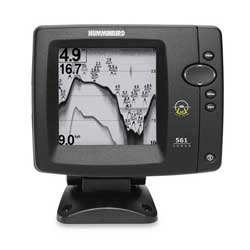
One horrible omission I left out of what I consider to be essential equipment on any boat I own would be a depth finder. There are really two kinds. One simply tells you the depth under your keep. It is really the depth under the transducer (the thingy that sends out the sonar signals). You have to add the depth of the keel to that, or subtract, actually. The display unit is something like this…

depth


An alternative, and the one I prefer, I called a “Fishfinder.” These instruments display their information in a visual rather than just a simple digital display. While they will spot fish below the boat the reason I like these, and I had one on Nancy Dawson, is that they show you what the bottom looks like. You can see if the bottom is gradually sloping or if it’s a steep drop off, information I think is essential for the safe operation of your boat. Displays look like this…

fish


I don’t care about the fish. I usually drag a lure behind me and have snagged some really nice meals that way, but as far as “finding” fish is concerned I couldn’t care less.

And another important omission was that of a stove. How are you going to cook that damned fish you just caught, anyway?

Many boats that have stoves have alcohol stoves. These are supposed to be the “safest” but if the boat I buy has one it’s going on Craigslist immediately. The damned things have too many downsides to make them worth while. One is that alcohol for cooking is expensive, and it’s not that easily available in out of the way locations. Secondly they don’t cook worth a damn. I was making a delivery one time from New Jersey to Fort Lauderdale on a converted oyster dredger and it had an alcohol stove. It took nearly half an hour to boil a couple of cups of water so we could make coffee in the morning.

Of course electric ranges are out of the question. Propane gets a bad rap. It’s heavier than air and a leak means the gas will drop down into the lowest part of the vessel where it becomes an explosion hazard. Even so, it is probably the most efficient medium for cooking to be found. When I had my Kaiser 26 one of the first buys was a two-burner stove from an RV outlet. It used propane and when I was off on my nine-month cruise I had to 5-lb tanks. In that whole time I only used 15 lbs. When I got back to the States I bought a 20 lb. tank. To be safe, when I was finished cooking I’d turn the gas off at the tank letting what was left in the hose burn off and then I’d detach the hose from the stove. It may sound like a bit of a pain to do that, but all told it was probably less than two minutes out of my day and I can live with that.

There are plenty of camping stoves available at reasonable prices but most of the ones I’ve seen use those stupid little disposable gas canisters and I’m not going to tote a bunch of those around, and trying to locate a place that sells them when you’re running low is a hassle I don’t want to put up with. A 20-lb. tank, on the other hand, is easy to deal with. With so many barbecue unit sitting on decks all around the country that use those tanks you can pick up replacements at many gas stations and convenience stores.

And, of course, extremely important is ELECTRICITY! Sure, I’d love to have big solar panels and for a couple of hundred bucks you can get a fairly decent solid panel that should keep your batteries topped off. You have to figure out how much electricity you’re going to be using, though.

One of the first things to do is to convert your running lights to LEDs. They gobble up just a fraction of the power in your batteries. One of the biggest drains I had on Nancy Dawson were the incandescent running lights. They’d completely drain my batteries when I was sailing at night, and as a consequence I ran illegally dark most of the time, only turning on my lights when another vessel was in view so I could be seen. And an incandescent anchor light is a great power thief. That’s why I’d be using the Suaoki solar powered lights for both an anchor light and for interior lighting after dark.

There are some things that will draw directly from the battery bank…the VHF radio is one. It will be on all the time when underway. The depth finder also runs directly off of the batteries but it doesn’t need to be constantly running if you’re in the channels of the ICW. You just need to turn it on when trying to creep into a shallow anchorage.

What I really need power for is to charge my notebook computer, my tablet computer and my smartphone. The phone is also my entertainment device filled with audible books. All of these can be charged via an inverter, a device that turns the battery’s DC power into a simulation of AC power. A 1,000 watt inverter can also power small hand tools like sanders and saws.

When I was living on my Kaiser 26 I had a 1,000 watt Generac generator. It had a DC outlet to help charge the batteries, but I also had a car battery charger. That damned generator was LOUD! What I’d do when I was anchored somewhere was to fill the tank half way, start it up, hook the car battery charger to it and the bank and then I’d get in the dinghy and go exploring somewhere. By the time I got back the gas had run out, the generator was quiet and the battery bank was charged for the next two or three days. I’m not ruling that out as a possibility.

There’s probably other essentials I’ve forgotten but that’s it for today.

2 Comments

Filed under Uncategorized

Setting Priorities

When I get back to the States sometime around July I want to buy something like this —

catalina

Why? Primarily because they’re cheap to buy. This one has an asking price of $3,500 and if you look on Craigslist you’ll find a lot of these “trailer sailers”some with asking prices of $1,500 or less.

It’s easy to see that a boat like this sure doesn’t have much headroom inside. Many of the builders eased that a bit with the creation of “pop tops.”

Catalina25_poptop2

These give close to 6-foot headroom in much of the cabin. Of course you’ve got all that open air space between the top and the cabin. Not real good when it’s raining or you’re somewhere where it’s buggy. But they do make canvas fixtures that enclose the cabin.

cover


Several downsides to something with this. First, you can’t use it while underway. Second, can you imagine what a pain in the patootie it would be putting this thing on every day if you’re out cruising? And taking it down. And doing it when the wind’s blowing like stink. Or it’s raining. No thanks.

So I’d want to build a pilothouse that would cover where the pop top was in the first place and make it attractive.

20492-5746723

That pic is of a Compac 23, but it wouldn’t be that hard to do with glass over foam. My friend, Stef, and I could do a good job of it.

BUT, one of my goals upon returning to the States and getting a boat is to go “adventuring.” The first thing I want to do is run up the ICW and go explore the St. John’s River and then return to Ft. Lauderdale for the first Thanksgiving dinner in seven years.

That means setting priorities. One thing I learned long ago as a professional yacht captain is that if you wait for everything to be “just right” you will never get off the dock. There are some things on your “to do” list that don’t have to be done before you leave. They can be done along the way. Building the pilothouse isn’t one of them, of course but it can wait since it’s not essential for making the trip, just for making it more comfortable.

Every boat comes with some extras that simply aren’t mentioned in the ads. Things like compasses, fenders (you lubbers call them “bumpers”) docking lines, life jackets, etc. Usually, but not always. I’ve given this a lot of thought about what is essential in order to make my first cruise.

REQUIRED

The Coast Guard mandates that boats carry certain equipment when underway. Some things are required on ALL boats no matter what their size, but mine will be less than 26 feet so I’m just going to list what I’LL need to have…

Recreational boats must carry Coast Guard approved Personal Flotation Devices, in good and serviceable condition, and of the appropriate size for the intended user. Wearable PFDs must be readily accessible, not stowed in bags, locked or closed compartments or have other gear stowed on top of them. Throwable devices must be immediately available for use. There must be one Type I, II, III, or V PFD for each person on board or being towed on water skis, etc., PLUS one Type IV throwable device.

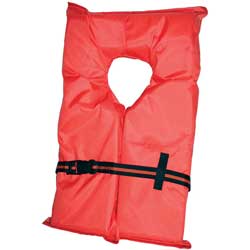
This is a Type II life jacket and is for “inshore” use and since I’ll only be cruising the ICW (Intracoastal Waterway) this is all need. I’ll carry three so I’ll have some if I want to take a couple of people along for an afternoon.

Type II

A “throwable” device could be one of these.

throw

vest


Each vessel is required to have a “throwable” floating device: throw

I’ll probably get one of these for myself. It’s a “Coastal Automatic Inflatable Life Vest… cuz with a small boat like the one I’ll be on you never know when you might end up in the drink and this type is light and non-restricting.

vest


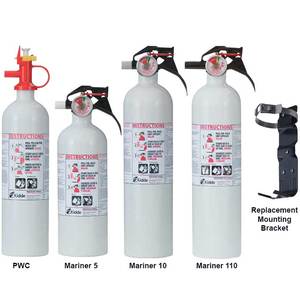
This is kind of “iffy.” You’re supposed to have at least one B-1 type Coast Guard-approved hand portable fire extinguisher.

fire

Where the “iffyness” comes in is that they’re not required on outboard boats less than 26 feet long and not carrying passengers for hire if the construction of such motorboats will not permit the entrapment of explosive or flammable gases or vapors, and if fuel tanks are not permanently installed. I’ll be a “sailboat” not a motorboat. I’ll be under 26 feet long and I won’t be carrying passengers for hire. Also my fuel tanks won’t be permanently installed. I WILL, though, be cooking on board with propane and one would be really stupid not to have a fire extinguisher. In fact, you should probably have one in the kitchen of your HOUSE. Flash fires from cooking oil or bacon fat are not unheard of.

All boats are required to carry visual distress signals approved for daytime and nighttime use. For pyrotechnic devices (hand-held or aerial red flares, floating or hand-held orange smoke, and launches for aerial red meteors or parachute flares) a minimum of three required, in any combination that totals 3 for daytime and 3 for night use. Three day/night devices will suffice. Devices must be in serviceable condition, dates not expired and stowed accessibly. Again, running in the ICW makes having these kind of a waste of money, but you HAVE TO HAVE them, soooo.

Every vessel less that 39.4 feet (12 meters) long must carry an efficient sound-producing device: a bell or a whistle. COLREGS (The International Regulations for Preventing Collisions at Sea) have specific rules about sound signals that vessels are required make in foggy conditions. Horn signals if the boat is underway, and bells if anchored. A horn isn’t strictly required but is a “must have,” in my opinion, in order to signal bridges that need to be opened and to  signal other boat of your intentions when underway in passing situations.

Now, just because you have all that on board doesn’t mean you’re ready to leave the dock and go cruising…In addition to the stuff that’s required there are still the…

ESSENTIALS 

In no particular order of importance, you’ll need to have:

At least four lines to secure the boat to a dock. It’s also a good idea to have a couple of others in reserve since it’s not unknown to leave on on the dock from time to time. One should also carry about 100 feet of extra line, just in case.

Your boat also needs to have running lights to comply with COLREGS if you get caught out after dark. You also need to have an all-around white light to show if you’re anchored. As far as the anchor light is concerned I’m really thinking of getting two or three of these…

lights

http://www.amazon.com/Backpacking-Rechargeable-Collapsible-Waterproof-Lightweight/dp/B00Y82IHWE/ref=sr_1_2?ie=UTF8&qid=1461089445&sr=8-2&keywords=suaoki

When I first ran across them somewhere in my net surfing I thought they’d be great as anchor lights and for interior lights as well. A couple I know who recently settled in nearby Boquete did some extensive cruising that encompassed the Pacific coast, a passage through the Panama Canal and Caribbean cruising said they has some of these and they loved them.

A VHF radio, either a base station or a hand held is essential. You need them to contact bridges you need to have opened. You need them to contact the Coast Guard in case of an emergency. You need them to hear local marine weather notices. You need them to talk to other boats.

An anchor. TWO actually. One as the principle anchor and a smaller, lighter one as a “lunch hook” for temporary anchoring or in cases where currents turn with the tide. What you do in that case is to drop and set your main anchor, let out double the scope you need at that spot and then drop and set the second anchor. When you’ve done that you pull yourself back to where you’d have been after dropping off the first anchor and secure both. Now, as the current changes direction you’ll ride to the second anchor rather than swinging in a big circle possibly dislodging the single answer and be dragged to some place you don’t want to be.

You’d also use two anchors close in to shore. As you approach the shore you drop one of the anchors and let out rode until your bow touches the beach. Step off into the shallow water, take your bow anchor and embed it deeply some distance up from the high water mark. Now, pull back on the stern anchor line until your sitting comfortably and secure both anchors.

Use PLENTY of chain between your anchor and rope rode. ALL CHAIN rode is best, but you’re not going to be able to carry enough of it around on a 23 foot boat! Curiously my Kaiser 26 had 200 feet of chain rode. The simple weight of it was often enough to keep the boat in position. I vividly remember anchoring off of Ranguana Caye on the outer reef in Belize. I was in six feet of water and let out 60 feet of chain. Whenever possible I dove down to make sure the anchor was well dug in to the bottom. As I swam along in the crystal-clear water I noticed that the chain was lying in an “S” shape about 2/3rds of the way to the anchor. The anchor wasn’t well dug in. It was a rather large Danforth and the flukes were only half way dug into the sand. Problem was they wouldn’t go in any further since it was simply a thin layer of sand over coral.

In the middle of the night a strong squall ripped through the area. There was lightning and heavy rain. The wind was piping at who knows how fast, but the rigging was moaning a low tune. I got up, went on deck towards the bow trying to ignore the rain pelting my skin like evil little imps taking chunks in nasty bites. I let out probably another 50 feet or so, secured it and went back below to my bunk. In the morning I went over the side and swam along the length of the chain. As strong as the wind had been it hadn’t moved the boat enough to straighten out the chain and the “S” was still there, so the strain never reached the anchor itself.

For me, I’ll probably limit the amount of chain I use to no more than 15 feet before connecting it to rope rode. Chain’s heavy, and it’s really going to be rough for me with my COPD to haul that chain and a 25 pound anchor off the bottom and onto the boat. It has to be done FAST because I’ll be by myself almost all the time and once the anchor breaks free from the bottom I’ll be adrift and need to get to the engine and tiller ASAP!

I was lucky on Nancy Dawson since the boat was equipped with a windlass to haul the anchor.Mine was a Simpson-Lawrence but looked a lot like this.

winch

It was mounted on the bow just aft of the bowsprit. You put a winch handle in the hole on the top and cranked away. It was fairly easy though there were a few times when the wind was blowing and I had to haul the weight of the boat against the force of the wind. (A little aside: I see many sailboat boat ads that say the boat is equipped with “wenches.” not “winches.” If they really WERE equipped with wenches I bet they’d sell in no time.)

A motor. On boats like this it’s generally an outboard. A 9.9 hp is generally the maximum and I’ve seen a lot of ads for these trailer sailers that have a 5 hp outboard with them. I’m sure that would push the boat along quite well since they’re rather light not lugging around a huge heavy lead-filled keel.  My Nancy Dawson had one of those keels and she was also built like a tank. She had an 8 hp Suzuki outboard that did double duty as power for the mother ship and for the Avon dinghy, and it did quite well. I’d hope for a 9.9 simply because I believe I’d get better mileage since the engine wouldn’t be pushing so much weight you could run it at a lower throttle setting and save gas.

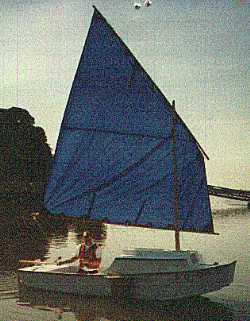
Almost every one of the boats advertised has sailing gear. Mast, sails, rigging, etc. That’s nice, but I don’t intend on using it. What I’d want to do is scrap the tall mast and rigging and replace it with a free-standing mast that would carry a lug sail like this…

lugsailcruiser

I’d go for something even smaller than that rig. Ninety nine point nine percent of my cruising is going to be in very constricted waters like the ICW and a sail would only be used with the wind abeam, from astern, or on the quarter, and then just to be able to ease up on the outboard’s throttle. I’m done beating into the wind. If I have to go to windward ever again it will be under dead dinosaur power only. AND what I would do for a sail, at least initially, would be a polytarp contraption like this…

sail

Hey, don’t laugh and don’t forget, I’m doing this on the cheap!

So why scrap the original mast? First, because most of my future cruising is going to be on the ICW I want to open as few bridges as possible, and there are a TON of bridges you have to have open for you when your air draft is 30 feet or higher. I’m thinking of a mast around 20 to 25 feet high in a tabernacle that I can raise and lower in a couple of minutes by myself. Also, being in a tabernacle I could lower it and support on a boom gallows so I could cover it with a boom tent to enlarge my sheltered living space while at anchor or docked.

A nice to have feature, but not an “essential” would be a Bimini cover in the cockpit.

I’m kind of on the fence as to whether a dinghy is an essential or a nice to have. Dinghies are the pickup trucks of cruising boats. They ferry people to shore when the boat is anchored and haul supplies to the anchored boat from shore. They’re also good for visiting other boats in the anchorage and for exploring little creeks where the big boat can’t go. But since I’m going to have a boat that has such shallow draft that I can simply step ashore in ankle deep water, and if I DO have to anchor out it will only be for a night or two at best so why would I need a dinghy.

But if I have a dinghy it WON’T be an inflatable, unless it’s part of the package when I buy the main boat. Inflatables have several bad features. For one, they’re targets for thieves. The damned things are prone to leak air and deflate, and there are a lot of little vandals who like to stick the tubes with something sharp just for fun. Because the primary boat is going to be so small my ideal dinghy would be something like this…

dinghydinghy2

I’d also consider making a Puddle Duck Racer that could be “nested” like the dinghy above. The PDR can be rowed, handle a small outboard or sailed. There are even plans for a modular PDR…I’ve loved the concept of this boat from the first moment I laid eyes on it.

Click to access ModularPDR.pdf

I like the idea of building it with foam and glassing it over. Lightweight, and if made modular it would fit neatly on the foredeck without disrupting the trim too much.

One thing to consider about a dinghy is to make it unique. Make it stand out from the crowd either by design or by painting it some atrocious color so that only an idiot would steal it because it would instantly be recognized as being stolen.

A rain water collection system I would consider an essential so you wouldn’t have to depend on going ashore to a marina to fill water jugs. There are umpteen million ways this could be done, of course so I won’t get into trying to list them, but this is how I did it on Nancy Dawson when I was on my nine-month cruise.

I used some of that epoxy stick I mentioned earlier and built about a two-inch high dam between the cabin and the toe rail astern of the water tank fill, leaving about a four-inch gap so water could flow through unhindered to the scuppers. When it would start to rain I’d let it go for five minutes or so to rinse off the cabin top and the decks. Then I’d plug the gap with a dish towel and open the water tank fill. In a good hard downpour I could fill that 35-gallon tank in about five minutes. During the whole cruise I probably didn’t go ashore for water more than three or four times.

Compass? Most boats will come with one screwed into a bulkhead, but even if there isn’t one on the boat do you think it’s vital when you’re cruising in waters like this…

chart

 If you can’t figure out which way north and south are, here, you shouldn’t be out in a boat in the first place. Which reminds me of a story. (LOTS of things remind me of a story.) Back in ’68, shortly after my ex wife an I moved to Fort Lauderdale I was driving a cab while looking for another job. One afternoon I was sitting outside one of the hotels on the beach waiting for a fare when a car pulled up beside me and asked how to get to such and such a place. I said, “Go north for about…”

“Which way is north?” the tourist interrupted.

Jesus fucking Christ nailed to a stick. Have you ever seen a fucking map of the United States in your entire life? We’re sitting right on the edge of the whole damned continent. Another hundred feet or so and we’d be in the damned Atlantic Ocean and you have to ask which way north is?

Anyway, I consider a pair of binoculars to be an essential item. You need it to pick out crucial buoys and day markers when you approach inlets with a profusion of markers.

That’s about all I can think of off the top of my head right now so I’ll stop. Things that I think are nice to have but non-essential gear will be dealt with later.

1 Comment

Filed under Uncategorized

The Next “Good Adventure”

So, as you know, I’m leaving Panama. It was a “Good Adventure” six years ago, but it isn’t anymore, alas, alack. I’m waiting to have some serious dental work done before I leave, so it’s probably not going to be before early summer at the soonest, but it’s not too soon to be thinking about where this next “Good Adventure” is going to take place.

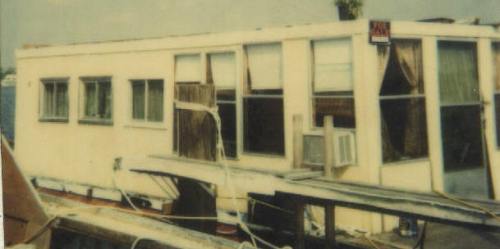
Initially I’ll be returning to Fort Lauderdale. It was home for some 35 years off and on. There were diversions, of course. A nearly 10-year stay in New Orleans that included close to three years on a shantyboat I found tied up to a tree in the Tchefunctae River on the north shore of Lake Pontchartrain and bought for $1,500. The boat, not the tree, the lake or the river, just to be clear.

Houseboat trimmed

Then there was nearly a four-year sojourn that included running this boat out of Antibes on the French Riviera and Marbella, Spain for almost three years,

Jolie Aire-Golfe Juan

and then buying my beloved Nancy Dawson, a Kaiser 26, and taking off for nine months and traveling alone on her to Mexico, Belize and the Rio Dulce in Guatemala.

Nancy Dawson

In Lauderdale I’ll be looking to buy a small sailboat and leave as soon as possible. The question, of course is, “and go where?”

Several places easily come to mind. They are, in no particular order, especially since the seeds are simply germinating now:

The Saint John’s River in northern Florida. When my mom died in 1976 my dad took his two toy poodles, boarded his 26-foot Stamas in Venice, FL and disappeared for six months. No one had any idea where he’d gone. Turns out he’d taken the Okeechobee Waterway across the state, hung a left and went up to the St. John’s where he did his mourning. I have an email friend who built a shantyboat that he charters out up there on the river…http://www.shantycraft.com

shantycraft


I have done what they call “The Great Loop” in ’74-’75. It’s a circumnavigation of the eastern half of the United States. A great adventure but I don’t need to do it a second time.

Great Loop

Both times I left Burnham Harbor in Chicago and ended up at Bahia Mar Marina in Fort Lauderdale. (The end spot was just coincidental but cool since it definitely closed the circle.) Looking at this map you see that the river route splits at the Illinois/Kentucky border. The yellow line is the Tennessee-Tombigbee Waterway route. It was just a pipe dream in ’75 so we went all the way to New Orleans on the Mississippi. I went UNDER every bridge in the New Orleans a year before I went over any of them!

Looking at the map above just gave me another idea…why not do a “Small Loop” and travel UP the Tenn-Tom, as it’s called, and return DOWN the Mississippi?

Then there’s the Intracoastal Waterway. There’s over 3,000 miles of it starting at Mile 0 in Norfolk, VA and then all the way down the Atlantic seaboard to Miami and then the Gulf Coast from Fort Myers to Brownsville, TX.

ICW-Atlantic Map ICW-Gulf Map

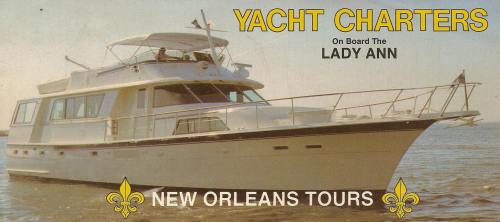
I’ve done the Atlantic Coast portion a half dozen times. The very first time I did it solo on a 43-foot Hatteras tri-cabin in ’74 that I delivered from Chicago to Fort Lauderdale. On the Gulf Coast ICW I’ve only done portions. I ran a Hatteras motor yacht in New Orleans for several years. The owners had condos over in Destin, FL and when they went there they liked to have the boat sitting at their dock sort of as bragging point to how wealthy they were.

Lady Ann-Hatteras 58

So I’ve done the portion from NOLA to Destin a half-dozen times, too. Then, when I was running inland crew boats for a few years I did portions of the Gulf ICW from Houma, LA and as far west as Grand Lake, LA. Perhaps I should take my new boat over to Ft. Myers and do the whole Gulf ICW to Brownsville. That would be a clean sweep of the waterway.

As you look at that map of the Gulf Coast ICW you see a break in the yellow line. That’s called “The Big Bend” and it’s an offshore jump of about 140 miles. In between is called Florida’s “Hidden Coast.” It’s very shallow all through there but there are a lot of places that would be worth poking into, like the Steinhatchee River and the Suwannee River. That’s right, the one Steven Foster wrote about!

Finally, and this would entail some real expense, it would be kind of neat to truck the boat up to Minneapolis  and come down the Mississippi. It would be a kick stopping for a couple of days at Lock and Dam #20 which is in Canton, MO where I went to college for three years. As I got close I’d send press releases saying that a former alum was coming down the river on a boat. I wouldn’t have to go all the way down to New Orleans, though. I could hop on over to the Tenn-Tom and go down to Mobile on it.

There are a ton of possibilities. Which of these do you like best?

1 Comment

Filed under Uncategorized

Packing It In – – Leaving Panama

I never thought I’d say this, and it pains me deeply, but I’m leaving Panama. Calling it quits. Packing it in. Returning to the States.

It won’t be for a couple of months but I’ll most likely be celebrating my 74th birthday in Florida.

Why am I doing this? It’s difficult to put things in any kind of orderly, coherent fashion, so this post is going to roam all over the place, but it’s primarily health concerns that are the reason. I have a serious case of COPD and though I take meds for it breathing is sometimes a real issue. Recently I had an incident that made me decide to take my old and best friend, Stefan, up on his mantra of the last couple of years, “Come back here. We’ll find you a boat you can live on and you can enjoy life again.”

It’s not that I haven’t been enjoying my life here in Panama. I DO. I love this place, but really, when I think about it, I’ve pretty much just been sitting around here waiting to die. So what finally made me decide to act on Stef’s offer? Well, the other day I headed out to the nearby tienda to get something cold to drink. It’s about 50 yards away from my front door, but when I got there the place was closed. So I decided I’d head to the Chino, Panama’s answer to the 7-11, which is about a hundred yards up the small hill past my house. When I got back to my house from the tienda I had to stop and rest for about five minutes to catch my breath. (I didn’t have my Ventolin inhaler with me.) When I got up to the Chino I was panting so hard that I had to sit down on a bench at the park across the street until my breathing returned to normal, and I sat down and rested after buying a couple of quarts of orange juice before walking back to the house. That did it. The decision was made. (More about health in a moment.)

Another issue is “What am I doing here?” The name of this blog is “One More Good Adventure.” Well, I haven’t been doing any adventuring for the last several years. The initial move down here was certainly an adventure. My original idea was to come down and build a shantyboat over in Bocas del Toro and then spend the rest of my life poking around that beautiful archipelago. Obviously that didn’t happen for many reasons that I’ve listed in previous posts and the fact that inertia is hard to overcome.

Another expat who moved down here from Sarasota with her husband, Kris Cunningham, is another inspiration for my decision to leave. She’s a 63-year old woman off on a real adventure. Recently she got on a plane and flew to Seattle, Washington, to visit her daughter and grand daughter. No big deal, right? Well, the thing is, she took her bicycle up there with her and plans on riding it back to Panama! And what am I doing with my adventure???

So, back to health. One thing all of us aging expats need to remember is that Medicare doesn’t pay a penny once you step outside the U.S. Health insurance for anyone in their 70s with three stents in their arteries and COPD is basically unobtainable, and if you CAN get it the premiums are so outrageous that it would take every cent I get from SS each month AND a loan to make the monthly note. I have been signed up on Hospital Chiriquí’s program but it isn’t really insurance. It’s more like a discount program. As at all the hospitals if you’re unfortunate enough to need one, you have to PAY UPFRONT before they’ll do anything for you. And with the program I have they will later reimburse you up to 70% of what you shelled out. It’s not great, but it’s better than nothing. And there are many horror stories about people having to use the public hospital here which is definitely something you don’t want to do.

Why haven’t I left yet? It’s because I’ve been putting off having some extensive dental work done. I don’t want to get into details now, but the fact is that even though it won’t be dirt cheap it will be just a fraction of the cost of what it would be in the States.

What would my new adventure consist of? I want to buy a small sailboat commonly referred to as a “trailer sailer.” Somewhere between 20-25 feet long with a retractable keel so I can creep into places I could never have gone with my beloved Kaiser 26, Nancy Dawson,  with her 4-foot keel. With a retractable keel drawing a foot or so I’d be able to put the boat right up on the beach and step off onto dry sand or just ankle-deep water. I don’t intend on staying stationary in a marina somewhere. After my 9-month sojourn to Mexico, Belize and the Rio Dulce in Guatemala I never went sailing with my boat again. I lived on it at a boat yard for nearly two years and then at Marina Bay. The reason was I was trying to work and save enough money so I could go cruising again, but it never happened.

When I was on the Rio Dulce back in ’92 if I’d have been able to get my hands on just $4,500 a year I could have had a nice life living there on the hook (at anchor). But I couldn’t get that much money so another dream shattered. Now, though, I have a small but steady income from Social Security, and living on a paid-for boat and anchoring out as much as possible, I can still have a nice life.

And what would this “adventuring” consist of? Taking the boat as far north on the Intracoastal Waterway as the Chesapeake and revisiting old places I’d stopped along the way on the half-dozen times I’d traveled that route: Charleston, SC; Belhaven, NC; Wrightsville Beach, NC; St. Augustine, FL among others. Checking out some of the intriguing places I never got to see along the way because I was working delivering the boat I was on. I’d also like to go explore the St. John’s River in north Florida. When my mom died my dad took his two toy poodles, got on his Stamas 26 over in Venice, FL, and disappeared for six months. No one knew where he’d gone. Turns out that he’d taken the cross-Florida route through Lake Okeechobee and vanished into the St. John’s to do his mourning.

I’ve never done the Florida Gulf Coast ICW and I’d like to see what that’s about. I’d like to poke around the waters of the Florida panhandle, Appalachicola, Pensacola, and on over into Alabama and Mississippi. Perhaps go up Mobile Bay and into the Tenn-Thom Bigbee waterway. Go into Louisiana and revisit all the places I know from my crew boat days: the bayous of Cajun country and up into the Atchafalaya. Check out places I’d lived at in New Orleans and St. Bernard Parish. Go on into Texas all the way to Brownsville, perhaps. The entire Intracoastal Waterway system from Norfolk, VA to Brownsville, TX is 3,000 miles. That’s a lot of area to explore. Who knows?

“So,” sez you, ” if you can’t walk 100 yards without getting knackred, how are you going to do all that stuff?”

Beats the hell out of me! There’s a good chance I can’t. ¿Quien sabe? as they say here in Boquerón, but you never know what you can do if you don’t try. But I wouldn’t be doing any long, open-water sailing. Most of what I’d be doing would be motoring or motor-sailing…using the sails when the wind was on the beam or off the quarter. No beating into the wind.

We’ll see.


9 Comments

Filed under Uncategorized

Getting Around

One of the first entries I posted on this blog was way back in April, 2009.

https://onemoregoodadventure.com/2009/04/29/the-boaters-car-of-pickup-truck/

None of that has really changed, of course, but thinking about living on a boat on the hook again has the whole dinghy situation churning around in my head. Sitting on the back porch of Dos Palmas Hotel in Bocas del Toro you look out at the Bocas Marina and the anchorage.

IMG_0600

Every one of those boats has an inflatable dinghy with as big a motor on it as it can possibly handle. After sailing to Panama at what was probably an average speed of around five miles an hour now that they’ve arrived they have to zip around as fast as they possibly can while the natives, descendents of those who lived here before Columbus arrived in 1502, have a more sedate manner of getting around.

IMG_0612

I’d be lying to you if I said I hadn’t loved my semi-rigid inflatable when I was on my nine-month tour of Mexico, Belize and the Rio Dulce in Guatemala. I enjoyed zipping around in it, the wind ruffling my hair. But times and ideas change.

My first inclination for a dinghy would be one of my favorite designs ever…A Puddle Duck Racer. http://www.pdracer.com/ I’ve written about these so many times in the past that I won’t elaborate on just why they appeal to me.

Here are a few reasons why I think one would be an excellent dinghy.

  • No asshole is going to punch a hole in one like often happens with inflatables.
  • You can row one whereas rowing an inflatable can be a exercise in frustration, especially if you have to row into a headwind.
  • You can sail a PDR. Ive seen, on line, sailing kits for inflatables, but I’m not so sure how well they’d work.
  • You can even put an electric trolling motor or a very small gas outboard on one, too.
  • The thing is so ugly that theft wouldn’t be a worry. Why? Well, because it would most likely be the only PDR around and instantly recognizable as stolen if you weren’t in it.

And the downside of a PDR?

Unless you’re going to tow it everywhere, there’s really no place to easily stow it on board a 23-foot boat with a 6-1/2-foot beam since the PDR has a 4-foot beam. There’s nothing wrong with towing a dinghy. I towed mine for, literally, hundreds of miles without incident.

They’re fairly heavy. I’d be living at anchor in a place with a tidal range of around 19 feet. That means that sometimes when I’d want to get ashore I’d be afloat, but when I’d be ready to return home both boats would be high and dry, or there would be a lot of sand to drag the PDR over to get to enough water to get it to float again. An inflatable would be even worse.

So, what’s the solution? Is there one? I think so. It would be in the form of what is known as a one-sheet boat. That’s one that is made from a single sheet of plywood. Made from 1/4-inch ply one would weigh around 35 lbs. It, too, would be something that wouldn’t be too attractive to thieves, especially if you painted it some garish colors. Here are a couple of pictures to show you what people have concocted with just a single sheet of plywood.

timthumb.php

And this from the designer of the boat above: http://koti.kapsi.fi/hvartial/oss_sam/oss_sam.htm

simprigalter6

Here’s all you need to build one of those: http://www.simplicityboats.com/minisharpie.html

If you find those interesting just Google “One sheet boats” and in the images section there are hundreds to look at.


1 Comment

Filed under Uncategorized

The Liveaboard Simulator redux

Recently I came across a blog about a young couple who bought a boat to live on and sail around the world. They’re living on it, the” sail around the world” part is yet to be started. I’ve wasted hours of my time when I should have been working on my new book reading their blog http://ventureminimalists.wordpress.com/ but it’s certainly been entertaining. And reading about their struggles with the new life of living aboard a boat I’m sure they would have been better prepared had they read my June 2009 post “The Liveaboard Simulator.” Hey, t.v. networks have re-runs…why shouldn’t I?

Just for fun, park your cars in the lot of the convenience store at least 2 blocks from your house. (Make believe the sidewalk is a floating dock between your car and the house.

Move yourself and your family (If applicable) into 2 bedrooms and 1 bathroom. Measure the DECK space INSIDE your boat. Make sure the occupied house has no more space, or closet space, or drawer space.

Boats don’t have room for “beds”, as such. Fold your Sealy Posturepedic up against a wall, it won’t fit on a boat. Go to a hobby fabric store and buy a foam pad 5′ 10″ long and 4′ wide AND NO MORE THAN 3″ THICK. Cut it into a triangle so the little end is only 12″ wide. This simulates the foam pad in the V-berth up in the pointy bow of the sailboat. Bring in the kitchen table from the kitchen you’re not allowed to use. Put the pad UNDER the table, on the floor, so you can simulate the 3′ of headroom over the pad.
Block off both long sides of the pad, and the pointy end so you have to climb aboard the V-berth from the wide end where your pillows will be. The hull blocks off the sides of a V-berth and you have to climb up over the end of it through a narrow opening (hatch to main cabin) on a boat. You’ll climb over your mate’s head to go to the potty in the night. No fun for either party. Test her mettle and resolve by getting up this way right after you go to bed at night. There are lots of things to do on a boat and you’ll forget at least one of them, thinking about it laying in bed, like “Did I remember to tie off the dingy better?” or “Is that spring line (at the dock) or anchor line (anchored out) as tight as it should be?” Boaters who don’t worry about things like this laying in bed are soon aground or on fire or the laughing stock of an anchorage…. You need to find out how much climbing over her she will tolerate BEFORE you’re stuck with a big boat and big marina bills and she refuses to sleep aboard it any more…..

Bring a Coleman stove into the bathroom and set it next to the bathroom sink. Your boat’s sink is smaller, but we’ll let you use the bathroom sink, anyways. Do all your cooking in the bathroom, WITHOUT using the bathroom power vent. If you have a boat vent, it’ll be a useless 12v one that doesn’t draw near the air your bathroom power vent draws to take away cooking odors. Leave the hall door open to simulate the open hatch. Take all the screens off your 2 bedroom’s windows. Leave the windows open to let in the bugs that will invade your boat at dusk, and the flies attracted to the cooking.

Borrow a 25 gallon drum mounted on a trailer. Flush your toilets into the drums. Trailer the drums to the convenience store to dump them when they get full. Turn off your sewer, you won’t have one. This will simulate going to the “pump out station” every time the tiny drum is full. 25 gallons is actually LARGER than most holding tanks.They’re more like 15 gallons on small sailboats under 40′ because they were added to the boat after the law changed requiring them and there
was no place to put it or a bigger one. They fill up really fast if you liveaboard!

Unless your boat is large enough to have a big “head” with full bath, make believe your showers/bathtubs don’t work. Make a deal with someone next door to the convenience store to use THEIR bathroom for bathing at the OTHER end of the DOCK. (Marina rest room) If you use this rest room to potty, while you’re there, make believe it has no paper towels or toilet paper. Bring your own. Bring your own soap and anything else you’d like to use there, too.

If your boat HAS a shower in its little head, we’ll let you use the shower end of the bathtub, but only as much tub as the boat has FREE shower space for standing to shower. As the boat’s shower drains into a little pan in the bilge, be sure to leave the soapy shower water in the bottom of the tub for a few days before draining it. Boat shower sumps always smell like spent soap growing exotic living organisms science hasn’t actually discovered or named, yet. Make sure your simulated V-berth is
less than 3′ from this soapy water for sleeping. The shower sump is under the passageway to the V-berth next to your pillows.

Run you whole house through a 20 amp breaker to simulate available dock power at the marina. If you’re thinking of anchoring out, turn off the main breaker and “make do” with a boat battery and flashlights. Don’t forget you have to heat your house on this 20A supply and try to keep the water from freezing in winter.

Turn off the water main valve in front of your house. Run a hose from your neighbor’s lawn spigot over to your lawn spigot and get all your water from there. Try to keep the hose from freezing all winter.

As your boat won’t have a laundry, disconnect yours. Go to a boat supply place, like West Marine, and buy you a dock cart. Haul ALL your supplies, laundry, garbage, etc. between the car at the convenience store and house in this cart. Once a week, haul your outboard motor to the car, leave it a day then haul it back to the house, in the cart, to simulate “boat problems” that require “boat parts” to be removed/replaced on your “dock”. If ANYTHING ever comes out of that cart between the convenience store and the house, put it in your garage and forget about it. (Simulates losing it over the side of the dock, where it sank in 23′ of water and was dragged off by the current.)

Each morning, about 5AM, have someone you don’t know run a weedeater back and forth under your bedroom windows to simulate the fishermen leaving the marina to go fishing. Have him slam trunk lids, doors, blow car horns and bang some heavy pans together from 4AM to 5AM before lighting off the weedeater. (Simulates loading boats with booze and fishing gear and gas cans.) Once a week, have him bang the running weedeater into your bedroom wall to simulate the idiot who
drove his boat into the one you’re sleeping in because he was half asleep leaving the dock. Put a rope over a big hook in the ceiling over your coffee table “bed”. Hook one end of the rope to the coffee table siderail and the other end out where he can pull on it. As soon as he shuts off the weedeater, have him pull hard 9 times on the rope to tilt your bed at least 30 degrees. (Simulates the wakes of the fishermen blasting off trying to beat each other to the fishing.) Anytime there is a storm in your area, have someone constantly pull on the rope. It’s rough riding storms in the marina! If your boat is a sailboat, install a big wire from the top of the tallest tree to your electrical ground in the house to simulate mast lightning strikes in the marina, or to give you the thought of potential lightning strikes.

Each time you “go out”, or think of going boating away from your marina, disconnect the neighbor’s water hose, your electric wires, all the umbilicals your new boat will use to make life more bearable in the marina.

Use bottled drinking water for 2 days for everything. Get one of those 5 gallon jugs with the airpump on top from a bottled water company. This is your boat’s “at sea” water system simulator. You’ll learn to conserve water this way. Of course, not having the marina’s AC power supply, you’ll be lighting and all from a car battery, your only source of power. If you own or can borrow a generator, feel free to leave it running to provide AC power up to the limit of the generator. If you’re thinking about a 30′ sailboat, you won’t have room for a generator so don’t use it.

Any extra family members must be sleeping on the settees in the maincabin or in the quarter berth under the cockpit….unless you intend to get a boat over 40-something feet with an aft cabin. Smaller boats have quarter berths. Cut a pad out of the same pad material that is no more than 2′ wide by 6′ long. Get a cardboard box from an appliance store that a SMALL refridgerator came in. Put the pad in the box, cut to fit, and make sure only one end of the box is open. The box can be no more than 2 feet above the pad. Quarter berths are really tight. Make them sleep in there, with little or no air circulation. That’s what sleeping in a quarterberth is all about.

Of course, to simulate sleeping anchored out for the weekend, no heat or air conditioning will be used and all windows will be open without screens so the bugs can get in.

In the mornings, everybody gets up and goes out on the patio to enjoy the sunrise. Then, one person at a time goes back inside to dress, shave, clean themselves in the tiny cabin unless you’re a family of nudists who don’t mind looking at each other in the buff. You can’t get dressed in the stinky little head with the door closed on a sailboat. Hell, there’s barely room to bend over so you can sit on the commode. So, everyone will dress in the main cabin….one at a time.

Boat tables are 2′ x 4′ and mounted next to the settee. There’s no room for chairs in a boat. So, eat off a 2X4′ space on that kitchen table you slept under while sitting on a couch (settee simulator). You can also go out with breakfast and sit on the patio (cockpit), if you like.

Ok, breakfast is over. Crank up the lawnmower under the window for 2 hours. It’s time to recharge the batteries from last night’s usage and to freeze the coldplate in the boat’s icebox which runs off a compressor on the engine. Get everybody to clean up your little hovel. Don’t forget to make the beds from ONE END ONLY. You can’t get to the other 3 sides of a boat bed pad.

All hands go outside and washdown the first fiberglass UPS truck that passes by. That’s about how big the deck is on your 35′ sailboat that needs to have the ocean cleaned off it daily or it’ll turn the white fiberglass all brown like the UPS truck. Now, doesn’t the UPS truck look nice like your main deck?

Ok, we’re going to need some food, do the laundry, buy some boat parts that failed because the manufacturer’s bean counters got cheap and used plastics and the wife wants to “eat out, I’m fed up with cooking on the Coleman stove” today. Let’s make believe we’re not at home, but in some exotic port like Ft Lauderdale, today….on our cruise to Key West……Before “going ashore”, plan on buying all the food you’ll want to eat that will:

A – Fit into the Coleman Cooler on the floor
B – You can cook on the Coleman stove without an oven or all those
fancy kitchen tools you don’t have on the boat
C – And will last you for 10 days, in case the wind drops and it takes more time than we planned at sea.
Plan meals carefully in a boat. We can’t buy more than we can STORE, either!

You haven’t washed clothes since you left home and everything is dirty. Even if it’s not, pretend it is for the boater-away-from-home simulator. Put all the clothes in your simulated boat in a huge dufflebag so we can take it to the LAUNDRY! Manny’s Marina HAS a laundromat, but the hot water heater is busted (for the last 8 months) and Manny has “parts on order” for it…..saving Manny $$$$ on the electric bill! Don’t forget to carry the big dufflebag with us on our
“excursion”. God that bag stinks, doesn’t it?….PU!

Of course, we came here by BOAT, so we don’t have a car. Some nice marinas have a shuttle bus, but they’re not a taxi. The shuttle bus will only go to West Marine or the tourist traps, so we’ll be either taking the city bus, if there is one or taxi cabs or shopping at the marina store which has almost nothing to buy at enormous prices.

Walk to the 7-11 store, where you have your car stored, but ignore the car. Make believe it isn’t there. No one drove it to Ft Lauderdale for you. Use the payphone at the 7-11 and call a cab. Don’t give the cab driver ANY instructions because in Ft Lauderdale you haven’t the foggiest idea where West Marine is located or how to get there, unlike at home.
We’ll go to West Marine, first, because if we don’t the “head” back on the boat won’t be working for a week because little Suzy broke a valve in it trying to flush some paper towels. This is your MOST important project, today….that valve in the toilet!! After the cab drivers drives around for an hour looking for West Marine and asking his dispatcher how to get there. Don’t forget to UNLOAD your stuff from the cab, including the dirty clothes in the dufflebag then go into West Marine and give the clerk a $100 bill, simulating the cost of toilet parts. Lexus parts are cheaper than toilet parts at West Marine. See for yourself! The valve she broke, the seals that will have to be replaced on the way into the valve will come to $100 easy. Tell the clerk you’re using my liveaboard simulator and to take his girlfriend out to dinner on your $100 greenback. If you DO buy the boat, this’ll come in handy when you DO need boat parts because he’ll remember you for the great time his girlfriend gave him on your $100 tip. Hard-to-find boat parts will arrive in DAYS, not months like the rest of us. It’s just a good political move while in simulation mode.

Call another cab from West Marine’s phone, saving 50c on payphone charges. Load the cab with all your stuff, toilet parts, DIRTY CLOTHES then tell the cabbie to take you to the laundromat so we can wash the stinky clothes in the trunk. The luxury marina’s laundry in Ft Lauderdale has a broken hot water heater. They’re working on it, the girl at the store counter, said, yesterday. Mentioning the $12/ft you paid to park the boat at their dock won’t get the laundry working before we leave for Key West. Do your laundry in the laundromat the cabbie found for you. Just because noone speaks English in this
neighborhood, don’t worry. You’ll be fine this time of day near noon.

Call another cab to take us out of here to a supermarket. When you get there, resist the temptation to “load up” because your boat has limited storage and very limited refridgeration space (remember? Coleman Cooler).

Buy from the list we made early this morning. Another package of cookies is OK. Leave one of the kids guarding the pile of clean laundry just inside the supermarket’s front door….We learned our lesson and DIDN’T forget and leave it in the cab, again!

Call another cab to take us back to the marina, loaded up with clean clothes and food and all-important boat parts. Isn’t Ft Lauderdale beautiful from a cab? It’s too late to go exploring, today. Maybe tomorrow…. Don’t forget to tell the cab to go to the 7-11 (marina parking lot)….not your front door….cabs don’t float well.

Ok, haul all the stuff in the dock cart from the 7-11 store the two blocks to the “boat” bedroom. Wait 20 minutes before starting out for the house. This simulates waiting for someone to bring back a marina-owned dock cart from down the docks…..They always leave them outside their boats, until the marina “crew” get fed up with newbies like us asking why there aren’t any carts and go down the docks to retrieve them.

Put all the stuff away, food and clothes, in the tiny drawer space provided. Have a beer on the patio (cockpit) and watch the sunset. THIS is living!

Now, disassemble the toilet in your bathroom, take out the wax ring under it and put it back. Reassemble the toilet. This completes the simulation of putting the new valve in the “head” on the boat. Uh, uh, NO POWER VENT! GET YOUR HAND OFF THAT SWITCH! The whole “boat” smells like the inside of the holding tank for hours after fixing the toilet in a real boat, too! Spray some Lysol if you got it….

After getting up, tomorrow morning, from your “V-Berth”, take the whole family out to breakfast by WALKING to the nearest restaurant, then take a cab to any local park or attraction you like. We’re off today to see the sights of Ft Lauderdale…..before heading out to sea, again, to Key West. Take a cab back home after dinner out and go to bed, exhausted, on your little foam pad under the table…..

Get up this morning and disconnect all hoses, electrical wires, etc. Get ready for “sea”. Crank up the lawn mower under the open bedroom window for 4 hours while we motor out to find some wind. ONE responsible adult MUST be sitting on the hot patio all day, in shifts, “on watch” looking out for other boats, ships, etc. If you have a riding lawn mower, let the person “on watch” drive it around the yard all day to simulate driving the boat down the ICW in heavy traffic. About 2PM, turn off the engine and just have them sit on the mower “steering” it on the patio. We’re under sail, now. Every hour or so, take everyone out in the yard with a big rope and have a tug-of-war to simulate the work involved with setting sail, changing sail, trimming sail. Make sure everyone gets all sweaty in the heat. Sailors working on sailboats are always all sweaty or we’re not going anywhere fast! Do this all day, today, all night, tonight, all day, tomorrow, all night tomorrow night and all day the following day until 5PM when you “arrive” at the next port you’re going to. Make sure no one in the family leaves the confines of the little bedroom or the patio during our “trip”. Make sure everyone conserves water, battery power, etc., things you’ll want to conserve while being at sea on a trip somewhere. Everyone can go up to the 7-11 for an icecream as soon as we get the “boat” docked on day 3, the first time anyone has left the confines of the bedroom/patio in 3 days.

Question – Was anyone suicidal during our simulated voyage? Keep an eye out for anyone with a problem being cooped up with other family members. If anyone is attacked, any major fights break out, any threats to throw the captain to the fish…..forget all about boats and buy a motorhome, instead.

1 Comment

Filed under boats, sailboats, sailing

Everyone Has A Dream – You Need To Live Yours NOW!

Everyone has a dream. Some want to sail around the world. Others might want to pack up and live off the land in some wilderness area. Back to the earth. Buy an RV and see the USA. Who knows? But everyone has a dream yet most of them are never fulfilled. Why? Well Sterling Hayden pretty much nailed it in his book Wanderer when he wrote:

“‘I’ve always wanted to sail to the South Seas, but I can’t afford it,’ [so many people say]. What (they) can’t afford is not to go.  They are enmeshed in the cancerous discipline of ‘security.’  And in the worship of security we fling our lives beneath the wheels of routine–and before we know it our lives are gone.

“What does a man need–really need?  A few pounds of food each day, heat and shelter, six feet to lie down in–and some form of working activity that will yield a sense of accomplishment.  That’s all–in the material sense. And we know it.  But we are brainwashed by our economic system until we end up in a tomb beneath a pyramid of time payments, mortgages, preposterous gadgetry, playthings that divert our attention from the sheer idiocy of the charade.

“The years thunder by.  The dreams of youth grow dim where they lie caked in dust on the shelves of patience.  Before we know it the tomb is sealed.”

Before you go any further with this post stop and reread that quote again and thing about how it applies to you and those around you. That quote had such an impact on me it changed my entire life. The power of words can do that to a person.

When I read that quote I wrote it down in my journal and in one form or another I’ve carried it around with me for the past forty one years. It was in 1971. I was working as the assistant public relations director of the largest non-profit hospital in the second most populace county in the State of Florida at the time. It wasn’t that I didn’t like my job. I did. Sorta. But the whole time I was doing it, and being impaled on my own free lance writing magazine articles, I was reading all the boating magazines and dreaming about being on a boat and sailing off to distant shores. And it hit me that 1) I was never going to have enough money to buy the boat I wanted to accomplish that dream. 2) I wasn’t willing to do what it took to make the kind of money it would take to accomplish that dream and 3) If you ARE willing to do what it takes to make that kind of money then you don’t have the time to be out sailing around in the first place until you’re probably too old to do it.

Everyone’s dream in their teens and early twenties or thirties has a young person pulling it off. Not someone who’s carrying around three stents in their arteries, taking pills twice a day to keep their blood pressure in check and whose fingers are gnarled from arthritis.

At about the same time as I read Wanderer I also read Viking’s Wake by Richard MacCullagh that contained a life-changing quote:

“And the bright horizon calls!  Many a thing will keep till the world’s work is done, and youth is only a memory.  When the old enchanter came to my door laden with dreams, I reached out with both hands.  For I knew that he would not be lured with the gold that I might later offer, when age had come upon me.”

I scaled my dreams way down from flashy boats that graced the pages of the yachting publications way down to one where I’d get a set of pontoons, perch a pickup camper insert on it and take off on the Intracoastal Waterway and perhaps do what is known as “The Great Loop” a water route that circles the eastern half of the United States.  But the reality of the situation was that I didn’t even have enough money to accomplish that. So when my wife and I parted company in the Great $16.25 Divorce (https://oldsalt1942.wordpress.com/2010/01/04/) I quit my job, got a job as a deckhand on a dinner cruise boat which led me to obtaining a U.S. Coast Guard 100-ton license and living out many of my dreams including doing the “Great Loop” in 1974/75, a dozen trips up and down the Intracoastal Waterway, living on the French Riviera and the Costa del Sol for three years and sailing across the Atlantic Ocean on other people’s boats and getting paid to do it, too. I eventually bought my own small sailboat and did a single-handed trip (another dream) from Fort Lauderdale to Mexico, Belize and the Rio Dulce in Guatemala and back.

Recently I found some YouTube videos by someone who calls himself “Skipperfound.”He’s a guy who’s living his dreams. He sort of adapted my pontoon and camper shell idea with plans for taking the boat from Ludington, Michigan down to the Florida Keys. He has over 124 YouTube videos of this trip and other adventures: the conversion of a bus (he sold the boat in Panama City, Florida) and his travels in it, and building a tiny house. This video shows the early stages of the construction of the boat.

<object width=”560″ height=”315″><param name=”movie” value=”http://www.youtube.com/v/rLQUV8bWHkA?version=3&amp;hl=en_US&amp;rel=0″></param><param name=”allowFullScreen” value=”true”></param><param name=”allowscriptaccess” value=”always”></param></object>

Naturally when someone is doing something as offbeat as Skipperfound it attracts attention. Sometimes people doing the out of the ordinary get interviewed by newspapers along the way. Here he is explaining his reasons for doing what he does. I don’t know if he ever read Sterling Hayden of Richard MacCullagh or not, but he’s sure taken their advise to heart.

<object width=”560″ height=”315″><param name=”movie” value=”http://www.youtube.com/v/o2Dh8ntaDt4?version=3&amp;hl=en_US&amp;rel=0″></param><param name=”allowFullScreen” value=”true”></param><param name=”allowscriptaccess” value=”always”></param></object>

Finally thereis a quote from John Irving’s A Prayer for Owen Meany:

“If you’re lucky enough to find a way of life you love, you have to find the courage to live it.”


2 Comments

Filed under boats, cruising, homemade boats, Houseboat, Shanty boat, Shantyboat Living, Small boat cruising

Meteor Fizzle in Boquerón

Next to man-made fireworks I like celestial ones, too. Early this morning (Jan 4) there was supposed to be a super meteor shower from 2 a.m. on. The Quadrantids shower was hyped up to have upwards of 80 to 100 “shooting stars” per hour. I set my alarm for 2:30 hoping to see some pyrotechnics to possibly rival what the locals put up on Christmas and New Years Eves.  Well, it was a washout here, if, indeed, anyone could have seen them in Panama to begin with. It was heavily overcast with clouds and only three or four stars were visible through tiny holes in the sky. Oh, well.

I’ve seen one before. Often when I tell people about my single-handed cruise on my beloved “Nancy Dawson” back in 1992 people ask, “Don’t you wish you’d had someone with you?” Well, the answer, for the most part is “Not always, but there were some events it would have been nice to share with someone.”

One of those times was when I was anchored out off the tiny island of Ranguana Caye at the edge of the reef in Belize. It was a lovely, isolated spot and everything a tropical islet is supposed to be. Small, at the edge of a coral barrier reef with a long line of breaking surf off to seaward, and covered with dozens of coconut palms. I was anchored in about 7 feet of crystal clear water on the leeward side of the island. A gentleman I’d met in the small town of Placencia owned the island and was building three tiny cabins that he hoped would earn him his fortune renting them out to dive tourists. He and a couple of helpers would come out during the week to work on the cabins but most of the week I spent there I was by myself.

One night I was lying out in my hammock that I’d strung up between the mast and the fore stay. I had finished off the last of a righteous bud I’d bought a week before from “Dancing Sam the Rasta Man” who had a small house beside the town’s famous “sidewalk.” I reclined there in my hammock miles and miles from the nearest artificial light. There was no moon, even. Just this wonderful canopy of a gajillion stars in the sky above. Marcia Ball, Doctor John and the Neville Brothers drifted up from the boom box in the cabin below.

And then the light show began, as if just for me. It was early August and the earth was moving through the Perseids belt. Shooting stars blazed all across the sky. For the next couple of hours not a minute went by without at least two or three and often dozens of meteor trails shooting across the heavens. And when I’d look over the side of the boat long luminescent trails ran in all directions as medium-sized fish chased little fish and big fish chased the medium-sized ones all intent on a fresh sushi night cap. THAT’S when I wish I’d had someone along to share the moment with.

3 Comments

Filed under boats, Boqueron Panama, cruising, Microcruising, Minimalist Cruising, sailboats, sailing, Small boat cruising, Small Sailboats, Uncategorized

The Ultimate Slacker’s Boat!!!

Murray Stevens instantly became my hero when he designed and built this —

Once again, another fine find from reading:

http://www.duckworksmagazine.com/11/reports/nov/index.htm

2 Comments

Filed under boats, Floating Homes, Houseboat, Living off the grid, Living Small, Microcruising, Minimalist Cruising, Shanty boat, Shantyboat Living, Small boat cruising

PDR Ocean Explorer Weekender

You all know I have a soft spot for the PDR (Puddle Duck Racer). Eleven months ago I wrote a post about how a Finn, Perttu Korhonen, modified the standard 8’X4′ PDR into a cool, but tiny, weekender. http://houseboatshantyboatbuilders.wordpress.com/2010/10/ In today’s issue of Duckworks (if you haven’t bookmarked this great blog, do it now) there was this video of Perttu taking a cruise on Lake Konnevesi. The lake is located in the middle of the country and the whole area seems to be covered with lakes. http://maps.google.com/maps?t=h&hl=en&ie=UTF8&ll=62.613562,26.559448&spn=0.721399,1.774292&z=9&vpsrc=6&output=embed
View Larger Map

I love the Ocean Explorer but I’m not sure I’d want to have one in Finland. I understand that summers are great there. They had it on a Thursday last year. Take a ride with Perttu in this YouTube video…

Comments Off on PDR Ocean Explorer Weekender

Filed under cruising, Living Small, Microcruising, Minimalist Cruising, PDR Racer, Puddle Duck Racer, sailboats, sailing, Small Sailboats